Between the various anime and shows that portray bear meat as an overwhelmingly pungent aroma that needs to be tamed, and the myriad of content creators that take advantage of is shock value as clickbait, the actual food culture surrounding the consumption of bear meat in Japan is far more restrained and deliberate, shaped by the meticulous handling of the bear from hunting and capture, to transport, processing and finally cooking.
The majority of bear meat consumed around the world (which isn’t much) has a certain unpleasant character to it, most commonly described as a sort of musky tone to it, like old leather that has somehow gone rancid. The fat itself has certain fermented notes to it which combine together to be cloying on the mouth, almost suffocating any seasoning applied to it. Maybe it’s for this reason that bear meat outside of Japan is marinated in strong flavours or stewed for long periods of time. However, when done right, the taste of the highest quality bear meat, like that served at Doujin (道人) or Hirasansou in Kyoto have a much milder, but still gamey taste that is reminiscent of roasted chestnuts and browned pork fat with fat that has a faint sweetness like dried fruit. Rather than masking the flavour, these restaurants aim to present it at its gentlest, slicing it thinly, heating it briefly, and serving it in broths designed to carry its sweetness, so that what remains is the most authentic taste of bear meat. In this series of articles, we have attempted to convey these principles.
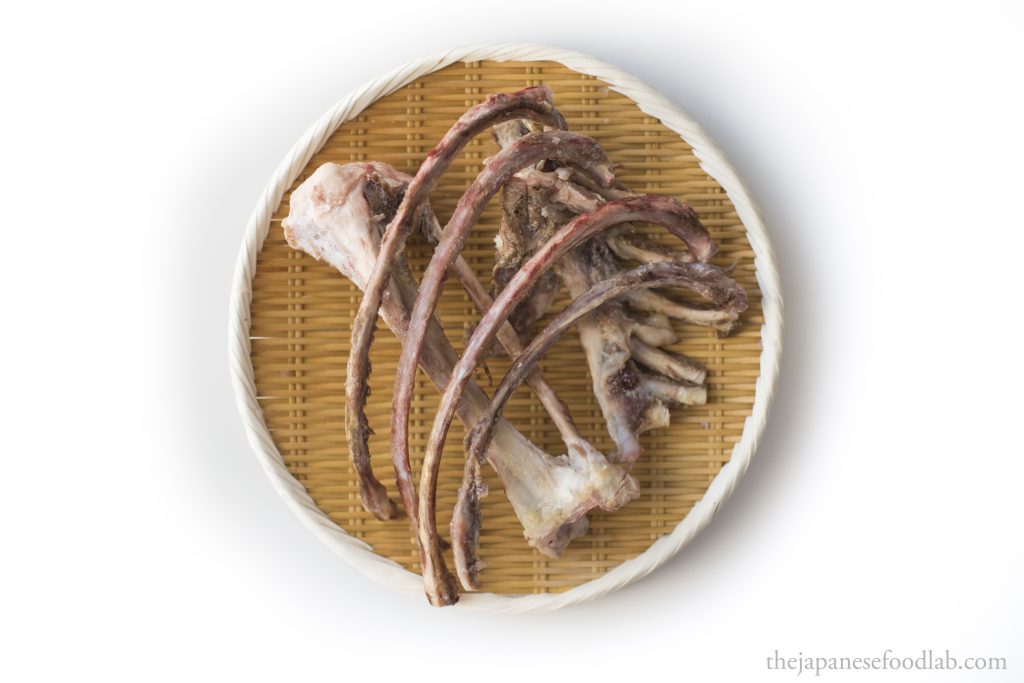
In Japan, bear hunting is only permitted during a period declared by the government between November and February and is an important part of controlling the population known for attacking humans and causing damage to farmland. Occasionally, permission is also given to cull them in the spring. Whilst we are not experts in processing game meat, we have heard from chefs that how the bear is prepared is even more important than how it is cooked. From the way its abdomen is opened at the base of the ribs in a way that does not damage the stomach or intestines, all the way to how the bear is skinned and the limbs removed. This is not only done as soon as possible to ensure the quality of taste, but also from a health and safety perspective, as wild meat in general has a high number of viruses and parasites, and thus must still be cooked through. It is for this reason that the most famous restaurants in Japan that serve it have personal connections with hunters they trust, delivering a quality of bear meat which is inaccessible to even most fine dining restaurants. We’ve actually had the fortune (or misfortune) to have the chance to taste bear meat that was improperly processed and it wouldn’t be an understatement to say that the smell and taste of unbearably aggressive, not in the same gamey smell that you’d associate with venison or boar, but of a spiciness that made our noses and lungs burn.
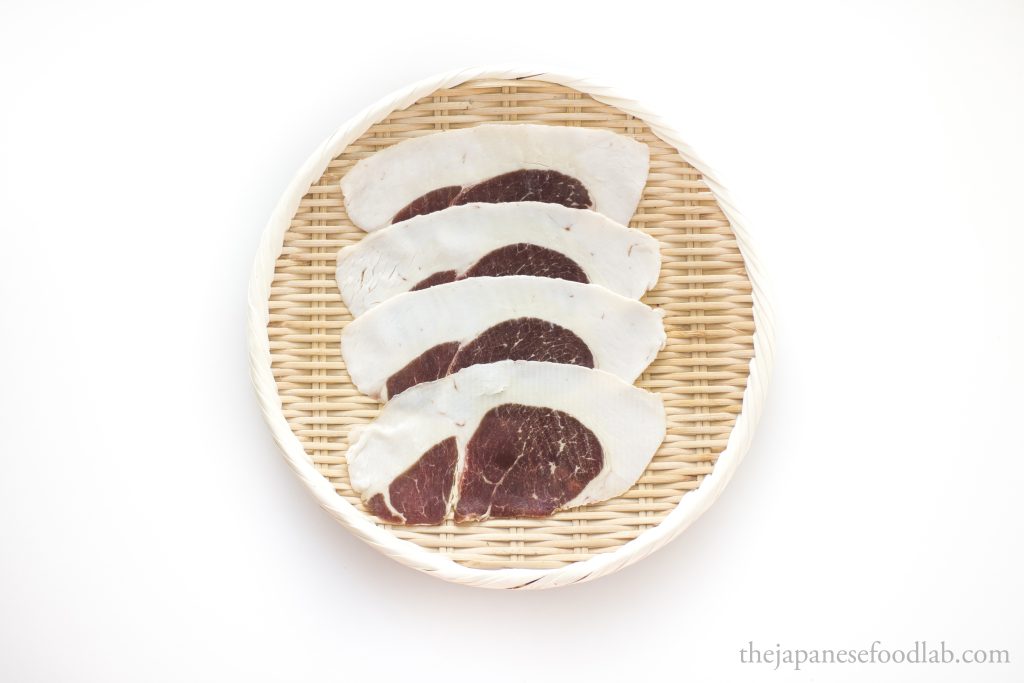
When you first see high quality bear meat, the characteristic that immediately jumps out at you is the thick layer of fat, much higher than any fat to meat ratio you’ll see on any other meat. It is this fat that carries the majority of the bear’s flavour, with many chefs in Japan claiming that bear meat consists of a high amount of unsaturated fat, thus giving it a lower melting point than our body temperature and thus a melt in your mouth texture (we have not been able to verify this).
The various cuts of meat are also valued differently, with the sirloin (ロース) being the most sought after due to the perfect balance of fat and tender meat. The tenderloin is also prized (ヒレ), but is only available in tiny quantities while not containing a lot of fat and is therefore not commonly used in Japanese cuisine. Next, the rump (ランプ) and boston butt (肩ロース) are still suitable for shabu shabu due to its high fat content and soft mouthfeel when thinly sliced, followed by the bottom round (外モモ), which is much tougher and leaner. The remaining cuts that you might come across are what some might consider less desirable due to toughness that requires a longer cooking time. They are also impossible to find served at a Japanese restaurant, and are instead usually processed into tinned or packaged curries that you might find at high end super markets. These include the knuckle (前モモ), top round (内モモ), brisket (前バラ), and shoulder (ウデ).
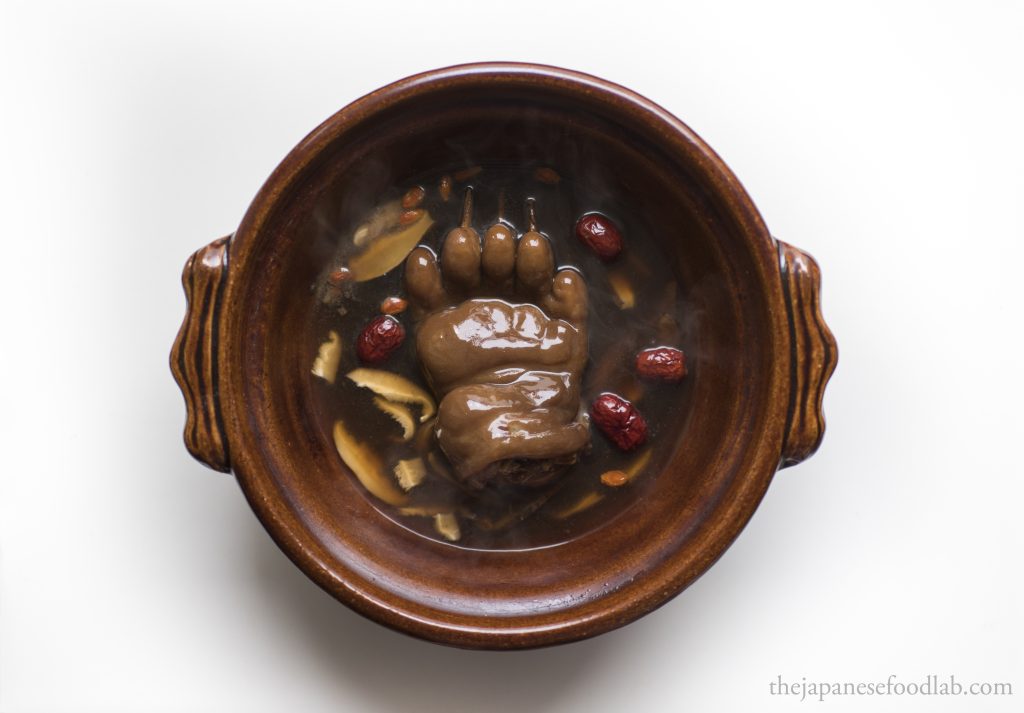
For those familiar with bear cuisine, the most prized parts of the bear are actually its gallbladder located next to the liver and its paws, both of which are actually very rarely consumed within Japan, but are usually exported to China. The gallbladder itself is carefully removed with a knife and the bile duct is tightly tied with string to prevent bile from leaking out before being dried and is used as a form of traditional chinese medicine. The paw on the other hand, is gently simmered for hours, giving it a gelatinous texture that is prized in Asian culture, akin to sea cucumber, bird’s nest and fish maw, making it one of the most famous imperial dishes in China. Interestingly enough, the recipe for preparing bear paw (熊掌) was exported to Japan from China, and whilst it has since been banned in China, still continues to be served in Japan!
