



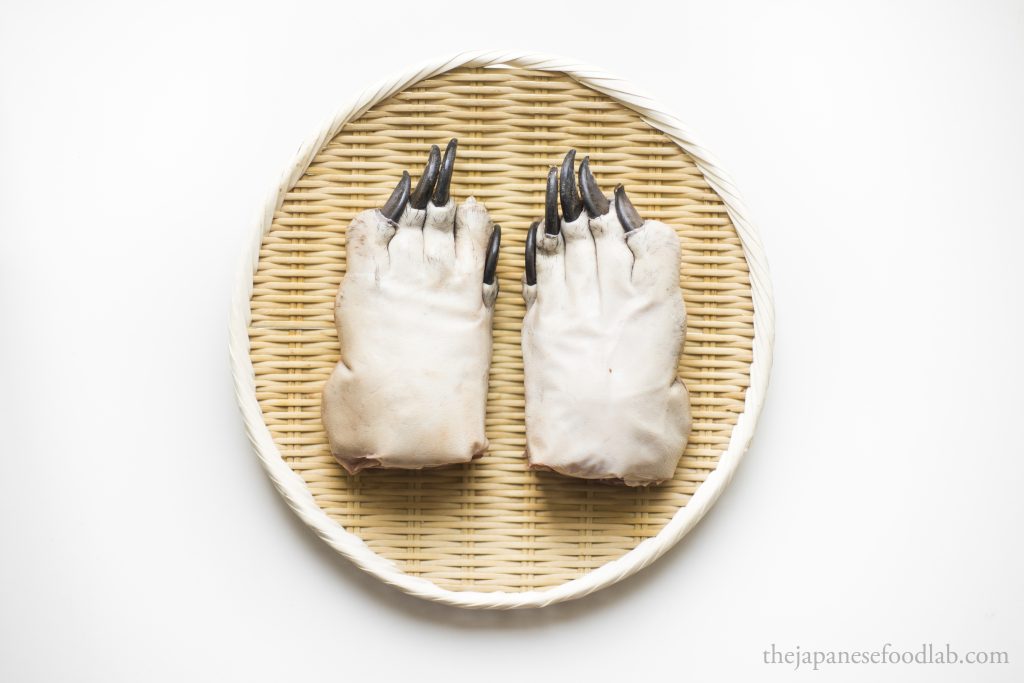
For some reason that we can’t really put our finger on, game meat in Japan just tastes different.
At the beginning we thought we were just biased, but having eaten different wild meats such as venison and wild boar all around the world, from France, the United Kingdom, Indonesia and Australia, we felt that it wasn’t just our illusion. Reading the work of other food writers around us also seemed to have confirmed our thinking, that somehow game meat in Japan tastes different, in a good way, but in a hard to describe way.
Whatever the reason, having finally come back to revisit the topic after so many years, we realised the explanation was probably not singular but cumulative, the sum of geography, ecology and technology. As Japan’s mountains are steep and close to the sea, the rivers are short, forests dense, and edible plant life abundant across the seasons. In spring the animals browse on young shoots and mountain sansai, in autumn on wild mushrooms, acorns, chestnuts and fallen fruit, slowly accumulating fat for the period of low physical activity during the winter. We believe that this constant variation produces fat that is softer and sweeter. Simultaneously, much of Japanese game meat comes from smaller, younger animals, trapped close to villages where they forage on farmland edges, a more and more common occurrence as the line between human civilization and the wild continues to blur with Japan’s aging population.
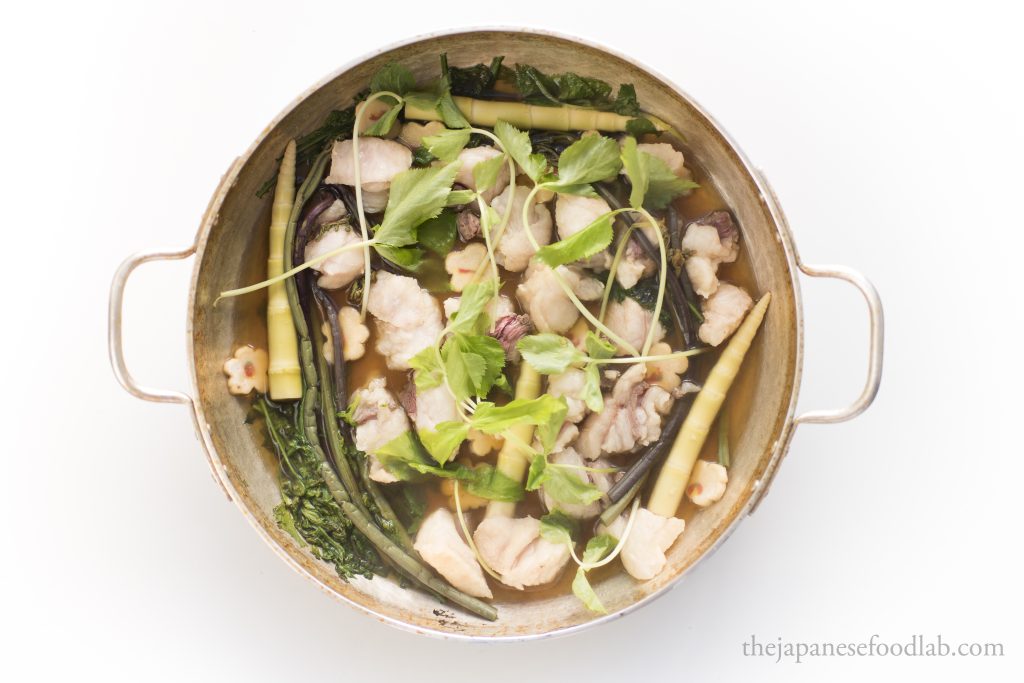
And then there is the cultural approach. Outside Japan, game meat is treated as something to be tamed through marinades, wine reductions, juniper berries, peppers, and hours of braising meant to domesticate the wildness. This not only makes it easier to overcook, but seeks to conceal the natural taste of the meat, instead, in our opinion, aiming to make everything taste like beef. In contrast, like all meat in Japan, game meat is thinly sliced and cooked briefly, preventing it from overcooking but heating it long enough to kill any parasites. The seasoning is mostly simple and supportive, aiming to make it taste clearly like deer, or boar, or bear at its most graceful moment.
Lastly of course, is the technology and human systems that work continuously and tirelessly, out of sight, to bring any ingredient to table. The biggest challenge in preparing and serving game meats is managing sanitation properly. Poorly sourced wild game can carry viruses and other parasites and thus must be cooked through. However, never have we seen such care to processing and safety standards, from exceedingly strict gun and hunting license restrictions to vans that have been outfitted to almost be like ambulances, with instruments that allowing freshly caught game meat to be finished with a precise finishing shot that allows optimal bleeding out, before the innards are gutted, meat is checked and then immediately refrigerated on vehicle, before being transported to a specialised processing centre.
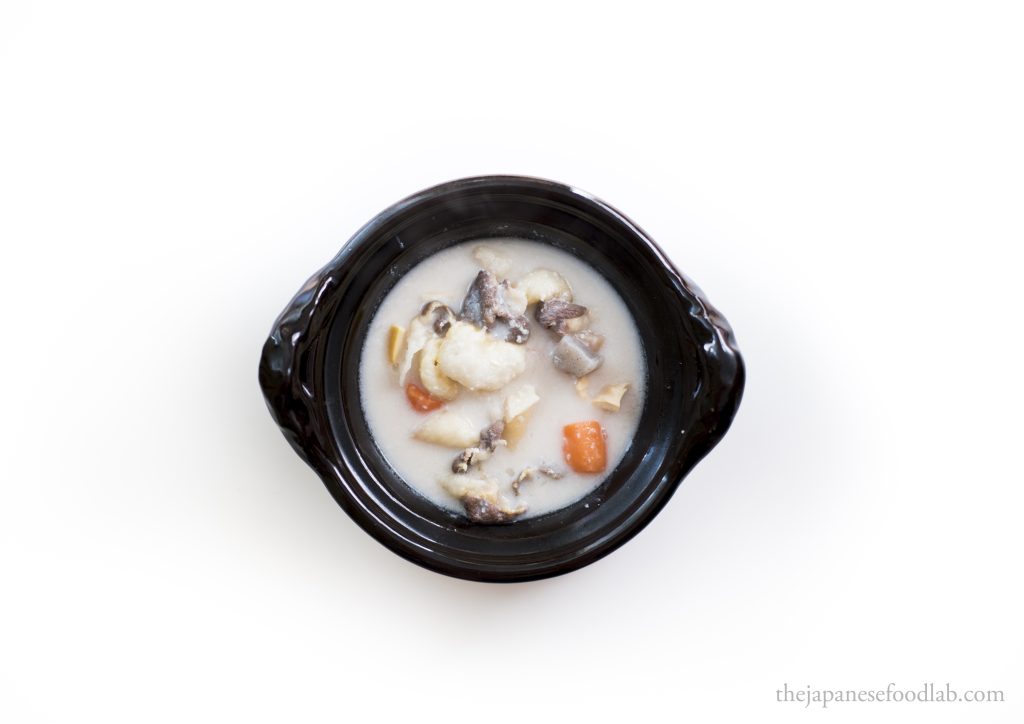
Unfortunately, as times have changed, so have the challenges faced by Japan’s game meat industry. The legion of hunters that were the backbone of the industry is dwindling, thus lifting the downward pressure that kept wildlife population in check. The population boom has thus resulted in reports of damage to farmland and crops measured in the billions of yen, and cases of hostile and dangerous encounters between humans and wildlife are on the rise. Given that the trend of abandoned farmland and population decline see no sign of stopping any time soon, one can only predict that these problems will only continue to get worse.
And so as we observe the food culture of Japanese game meat standing at a turning point, we wish to introduce our series on gibier, hoping to do justice to the centuries old culture of eating wild game meat in Japan. The word gibier itself originates from the French word for game meat, but has since been adapted to Japanese.
