This article is part of our series on Yamabito Ryouri, where we have elaborated more on bear meat. For some more thoughts about the state of wild food in Japan, check out our substack where we share how our experience sourcing ingredients for this series found us face to face with the actual impacts of Japan’s changing demographics.
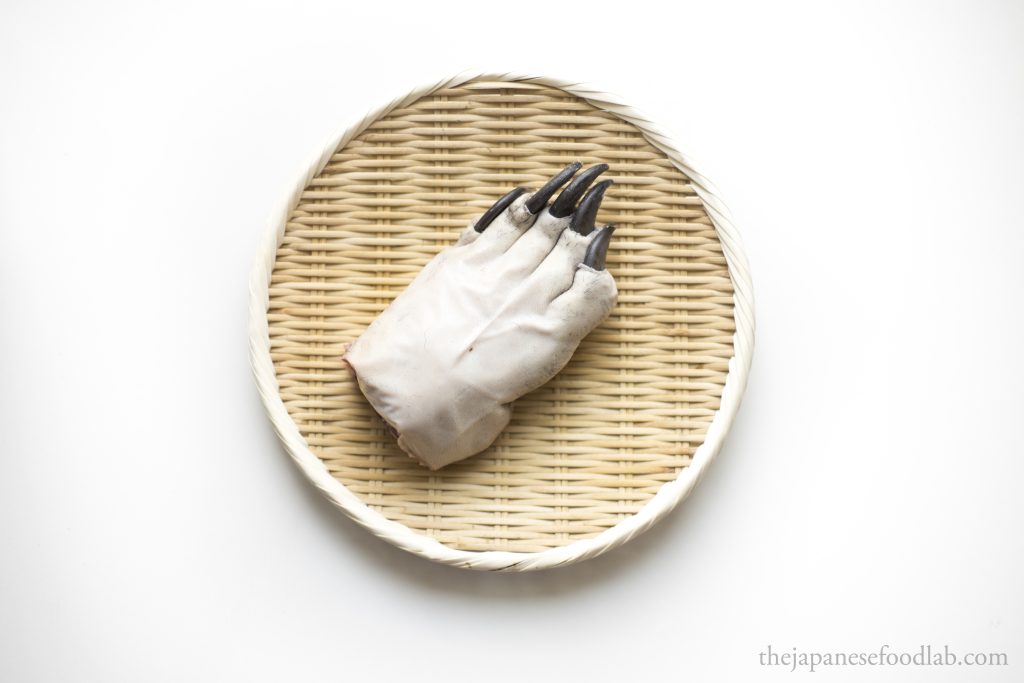
Known in China as one of the Eight Treasures of the Zhou Dynasty (八珍), simmered bear paw is an extremely rare and traditional dish that originated in China, where it has since been banned. However, the dish is still well and alive in Japan, where there is still a culture of consuming bear meat. And let us tell you, this is no doubt one of the most expensive dishes we’ve ever had to experiment making, as a single bear paw finger easily costs up to 40000 yen in a restaurant, let alone the entire paw (it almost felt like collecting Sukuna’s fingers from Jujutsu Kaisen).
For this dish, we tried to recreate the taste of the legendary Japanese chef that specialises in chinese cuisine Naruke Yukio, of restaurant Yurin (神田雲林) and even tried to use the left front bear paw, which in accordance to what we were told, even though we don’t believe it, is the tastiest of the four paws as it is the paw the bear licks after eating honey.
As we’ve mentioned before on our website, there is a soft cohesive gelatinous chew texture that is prized in many asian dishes that is not as appreciated in the English speaking world. Many of the most expensive delicacies, from bird’s nest, sea cucumber, shark fin and fish lips reflect this, as in called ‘hua’ (滑) in chinese or, ‘puru puru/mochi mochi’ (ぷるぷる/もちもち) in Japanese. This soft, bouncy, lip-smacking mouthfeel is less about taste, but a textural preference that is associated with refinement and technical cooking skill. Here, simmered pear baw is supposed to be the pinnacle of this texture, with unparalleled stickiness and elasticity. However, to bring out this texture requires long careful simmering.
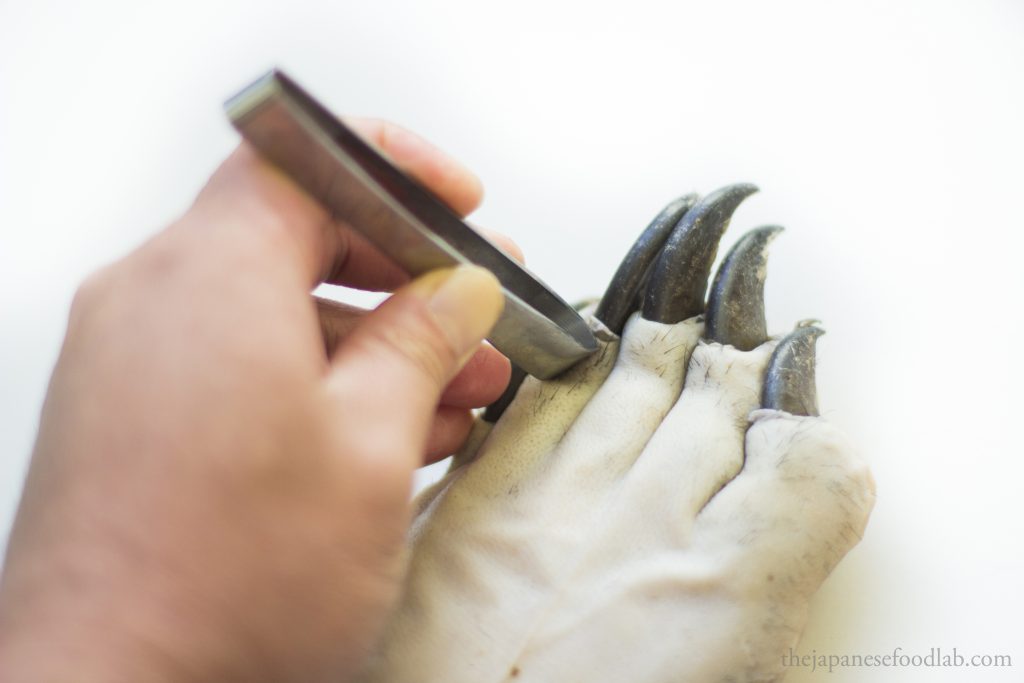
If you’re lucky enough to be able to purchase a bear paw with the fur attached directly from a hunter, then you need to carry out the first step in this recipe, which is to simmer the bear paw for around 2 hours, with its hair and claws, in a cleaning broth in order to soften it enough to remove. You’ll then need to be extra careful when removing the hair without breaking the skin. We recommend doing this with a pair of tweezers and it takes around 1 hour of careful pulling to do so. The fur will come out in tufts but underneath the layer of fur lies smaller hairs that are best removed with a blowtorch, just like the hairs on pork belly or pigs trotters. It is easier to remove the fur whilst the paw is hot.
Making the cleaning broth may seem wasteful but is an important step to remove any unwanted smell from the paw. It is for this reason that the lid is left off during the initial cleaning simmer and is also why a liberal amount of alcohol is used. This broth and the ingredients should be discarded after use.
Unless you’re from a traditional Japanese establishment with connections to hunters directly, most of the time any bear paw you are able to purchase will have the fur removed already as required by the safety regulations. This is actually a benefit for you, as it saves you a lot of work. However, we still recommend simmering the raw bear paw and following the recipe in order to not throw off the cooking times, whilst also removing any unwanted smells. Sometimes the bear paws already have their fur removed but the clays are still attached so you’re gonna need to simmer it anyway in order to remove the claws.
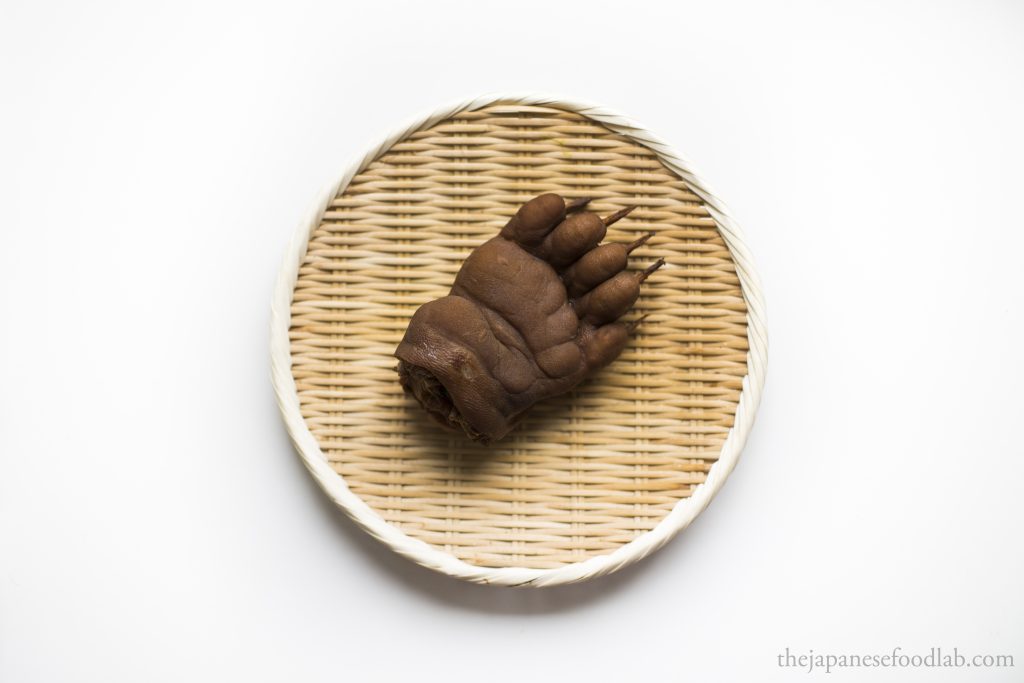
You then need to tie up the paw with muslin cloth and string as after the second cooking in order to maintain the final presentation, as the paw becomes very fragile and breaks apart easily. After you remove the bear paw, you then reduce the stock down to a sauce and can season it with extra soy sauce, salt and honey to taste.
The dish is then finished by adding the reduced stock to dried shiitake mushrooms to rehydrate them, before thickening the sauce with a cornstarch syrup. The bear paw and rehydrated goji berries and then added and coated with the sauce until heated through. At the restaurant, this is done in a Kumoi Kiln claypot.
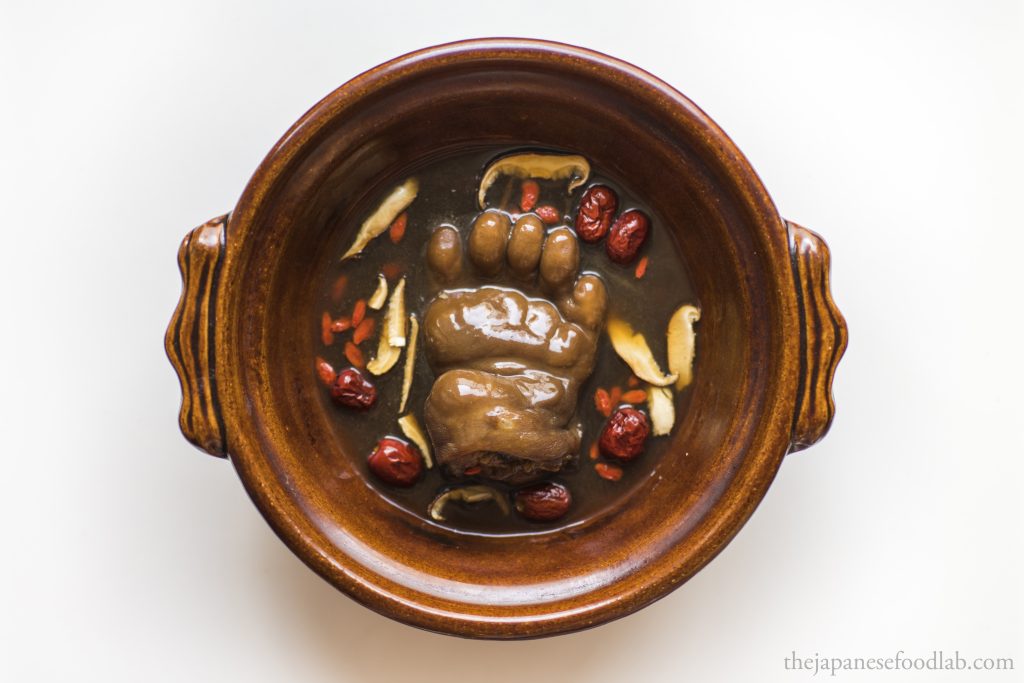
Japanese Simmered Bear Paw Recipe
Cleaning broth:
2 bear paws
1 leek
2 onions
500ml of cooking sake
3000ml of water
Simmering stock:
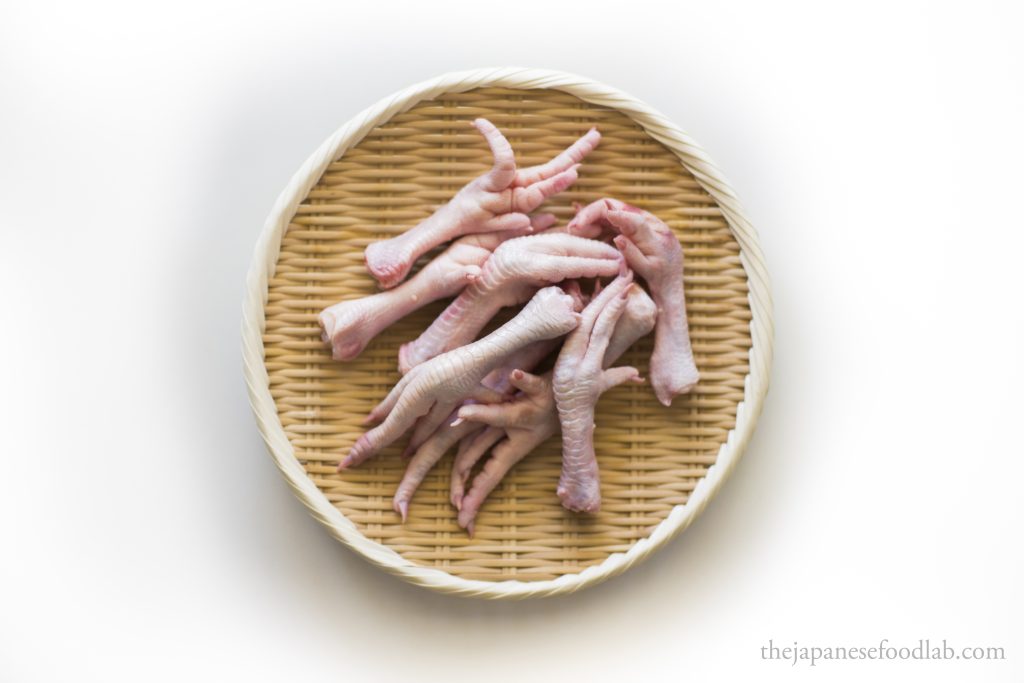
1kg of pig neck bones
1kg of chicken feet
1 carcass of a stewing hen
100g of ginger
250g leek
600g of onions
100g of honey
420g of apples
150g of soy sauce
2 handfuls of dried jujubes
Cheesecloth and string
To finish:
Cornstarch
Dried goji berries
Sliced dried shiitake.
8-year aged black vinegar (Kurozu)
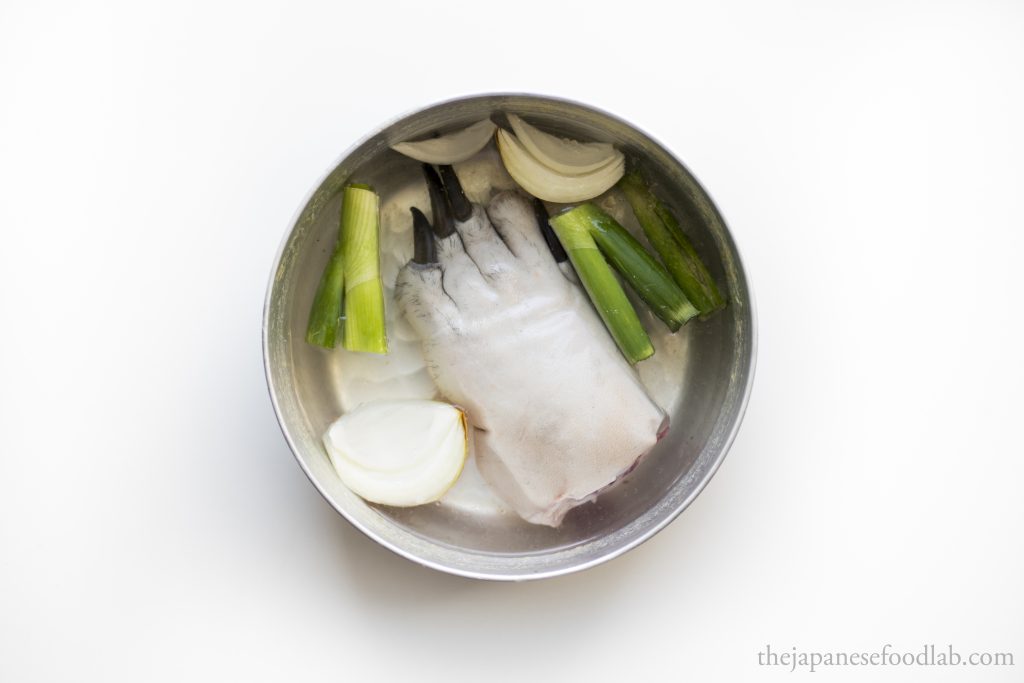
This recipe creates far more stock than needed for 2 bear paws, and can easily be used for up to 4. We’ve tested this recipe a few times and have found that the simmering time needed to fully soften a bear paw actually varies by quite a bit. Some bear paws have only taken around 4 hours of simmer but some we’ve encountered take up to 6. The best way to test is to poke gently with a knife and see if it starts to fall apart. Use your judgement.
To begin, roughly cut the onions, leaving the skin on. Slice the leeks and add all the ingredients for the cleaning broth into a pot. Bring up to a simmer and add in the bear paw as is. Allow to simmer for 2 hours with the lid off until the liquid has reduced about one third and the paw has somewhat softened.
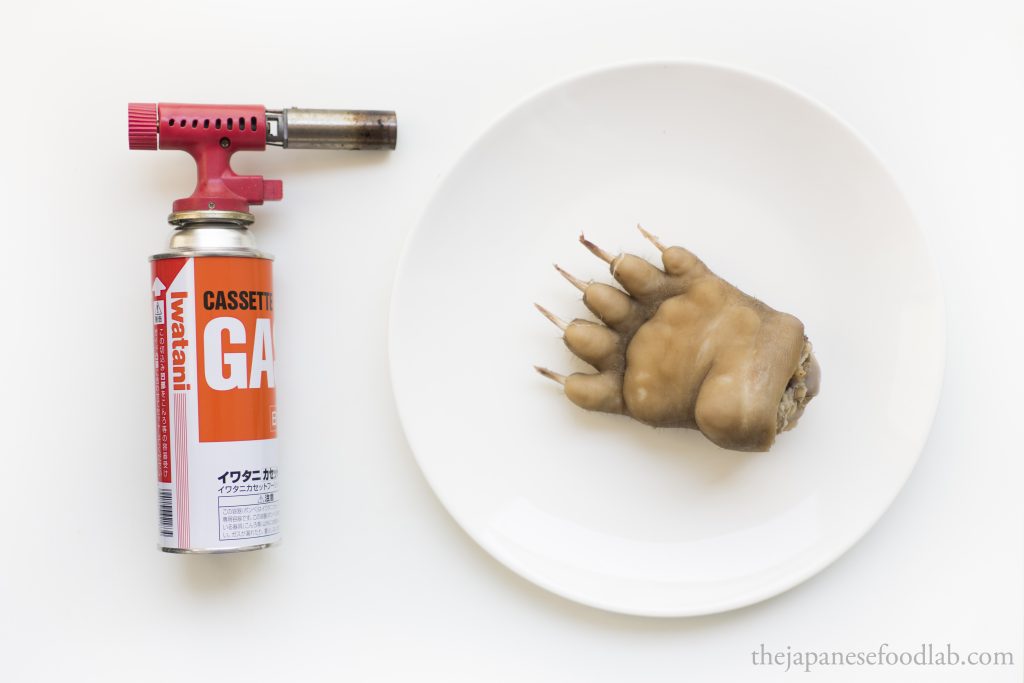
Strain out the bear paw and discard the stock. Using a fish boning tweezer, pluck the bear fur away in tufts whilst the paw is still hot, being careful not to break the skin. Once all the outer fur has been removed, use a blowtorch to burn off any remaining small hairs that are hard to access, especially between the fingers.
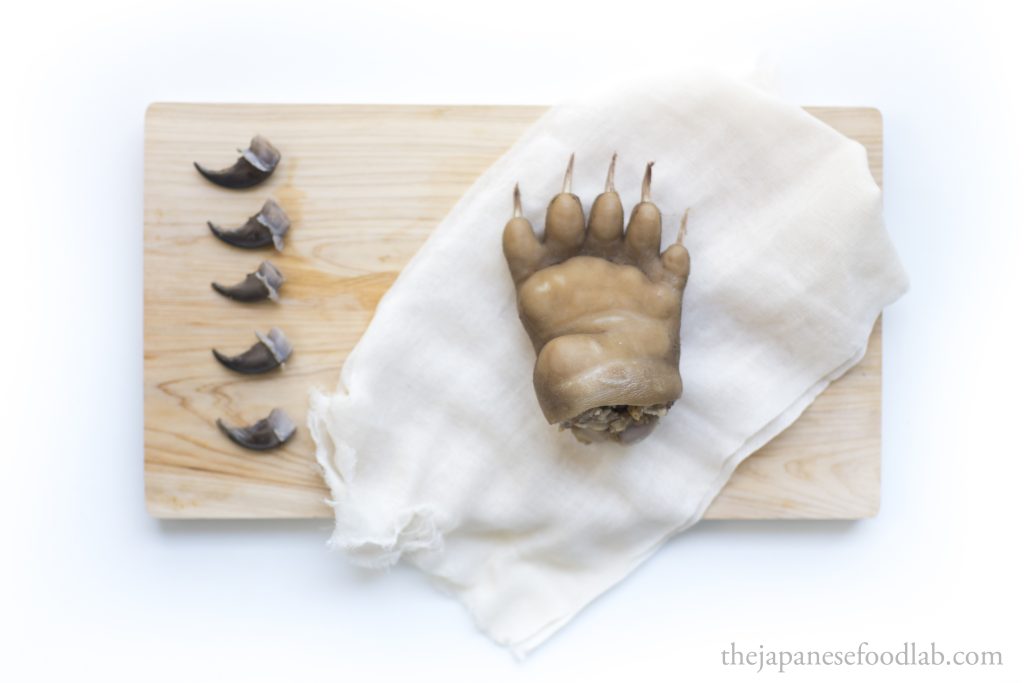
Next remove the bear claws by pulling on them. If they are hard to remove, use a pair of pliers.
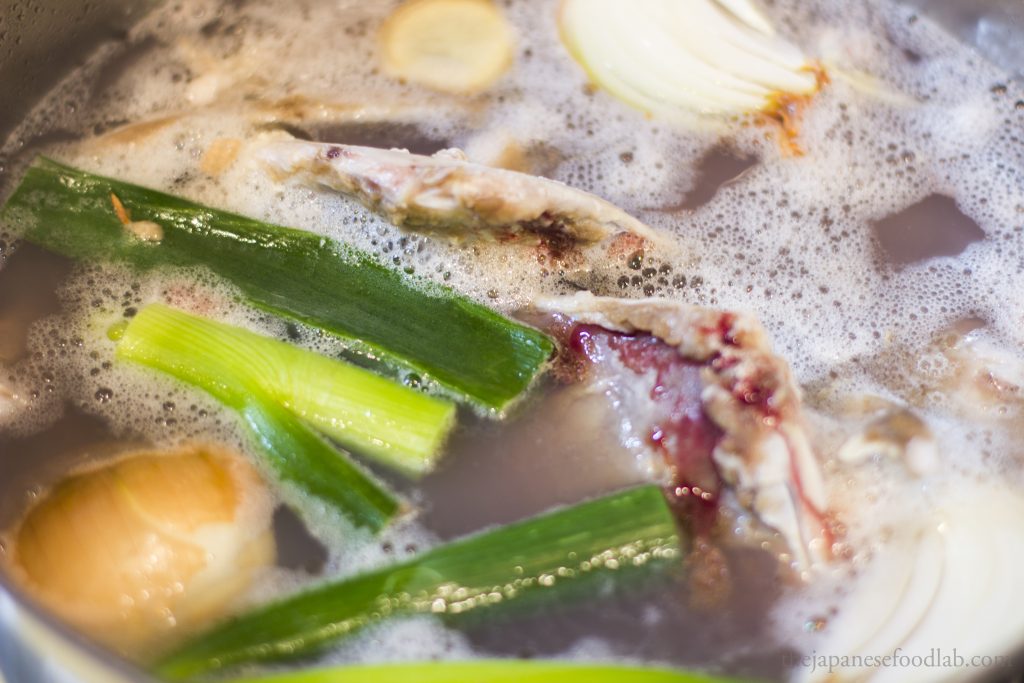
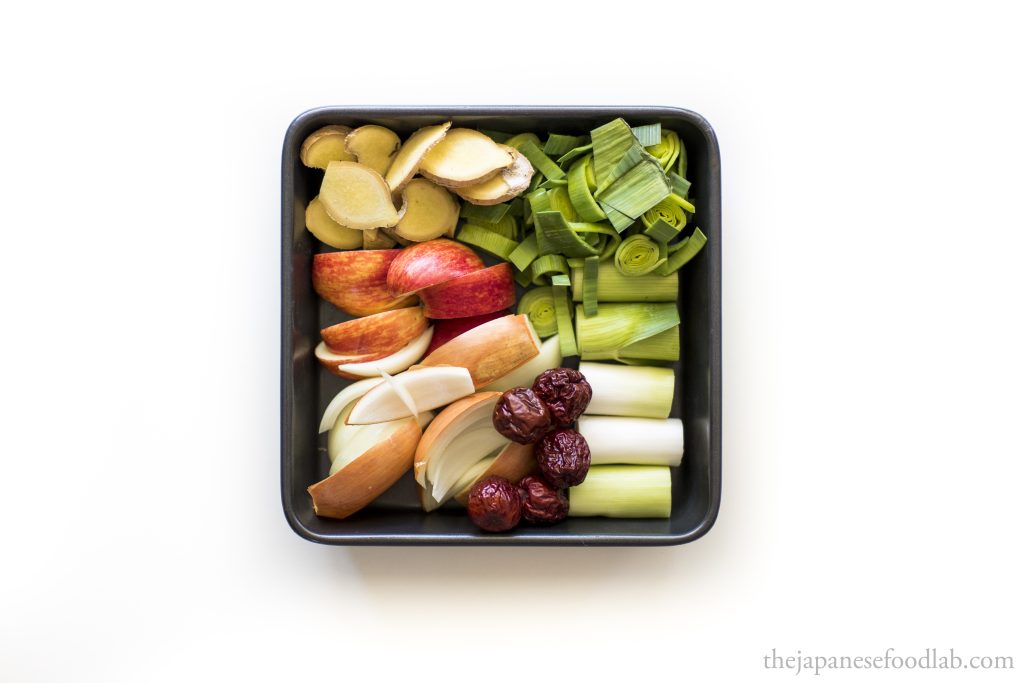
Add the pig bones, chicken feet and carcass to a large stock pot and cover with water. Bring to a boil and skim away any scum that rises to the surface. Whilst waiting for the pot to boil, tie up the paw in muslin cloth and string. Once all the scum has been removed, turn down the heat to a simmer and add in all the remaining ingredients.
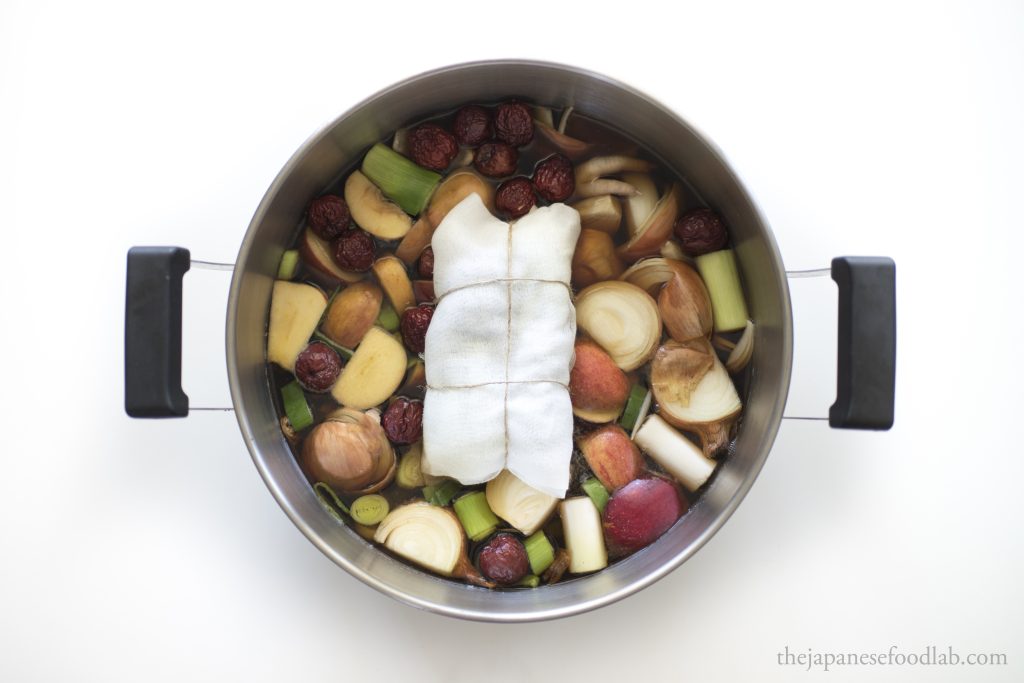
The saltiness of the stock as this point should be like a thin soup and fairly bland, adjust accordingly. Lay the bear paw on top, making sure it’s fully submerged. Simmer for 2 more hours or until it is soft enough to feel like it’s about to break apart.
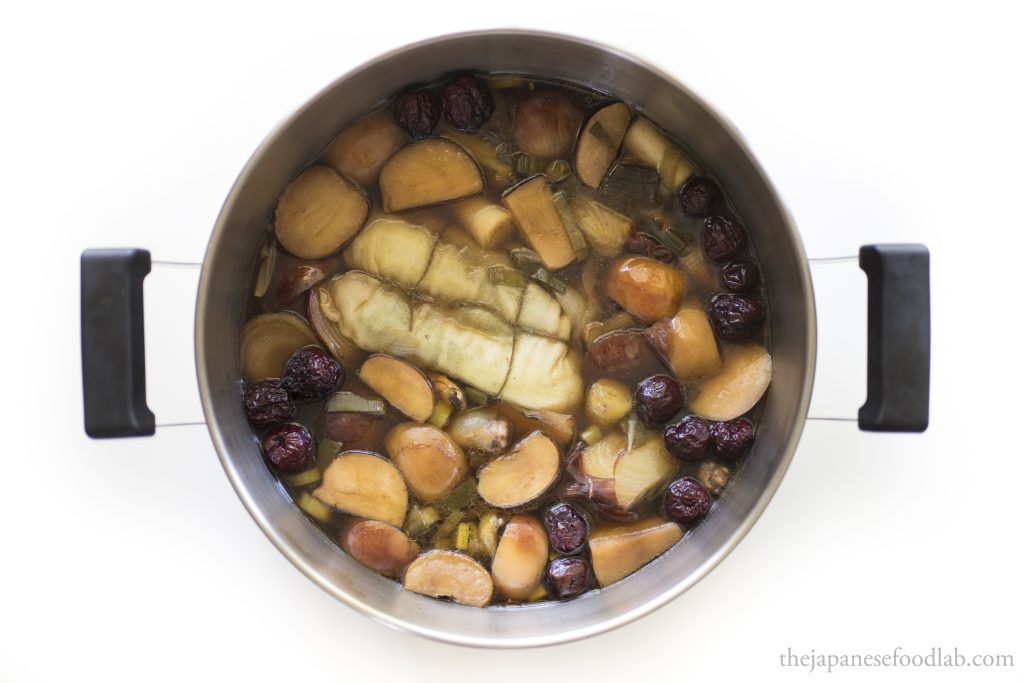
Once soft, remove the bear paw and strain out all the remaining ingredients from the stock and discard them. Return the stock onto high heat and reduce until the flavour has concentrated, around 1/10th the volume. Rehydrate the dried goji berries by soaking them in water.
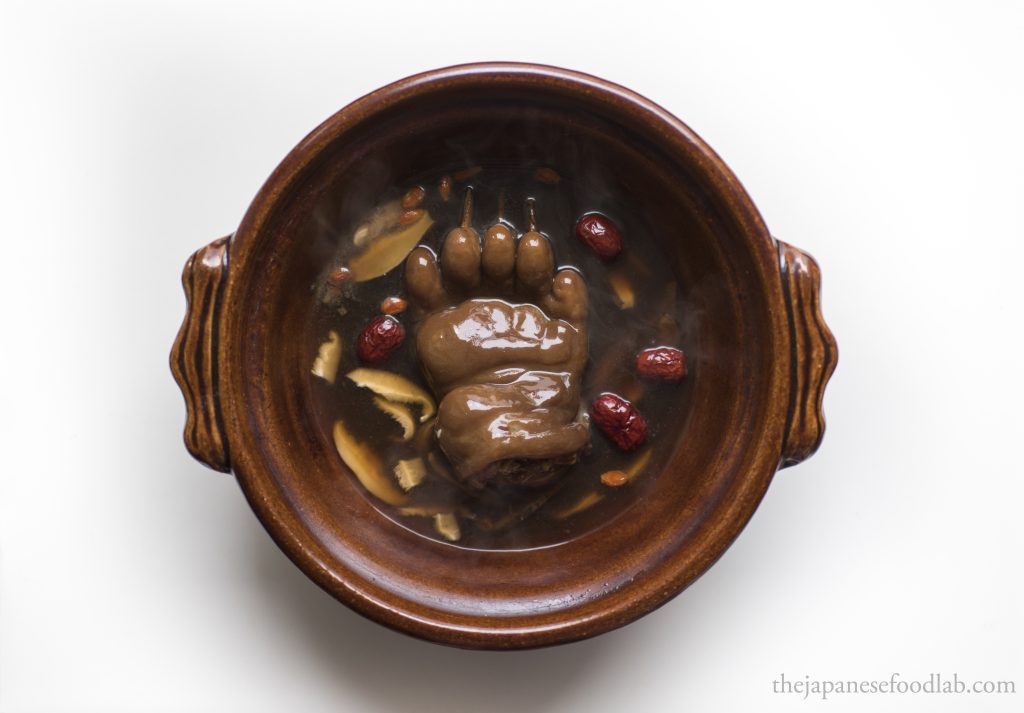
In the serving donabe, add some stock to dried shiitake mushrooms and season to taste with more honey and salt, balancing it out with a dash of 8-year or more aged Japanese black vinegar. Thicken by adding a slurry of equal parts cornstarch and water, adding it bit by bit slowly and heating until the thickness is just right. Add in the rehydrated goji berries and bear paw and simmer until heated through.
Serve at the table by breaking apart the bear paw into individual fingers.
