To learn more about suppon, check out our series of articles. This article assumes that you have done all the steps on how to fillet and prepare a Japanese soft shelled turtle.
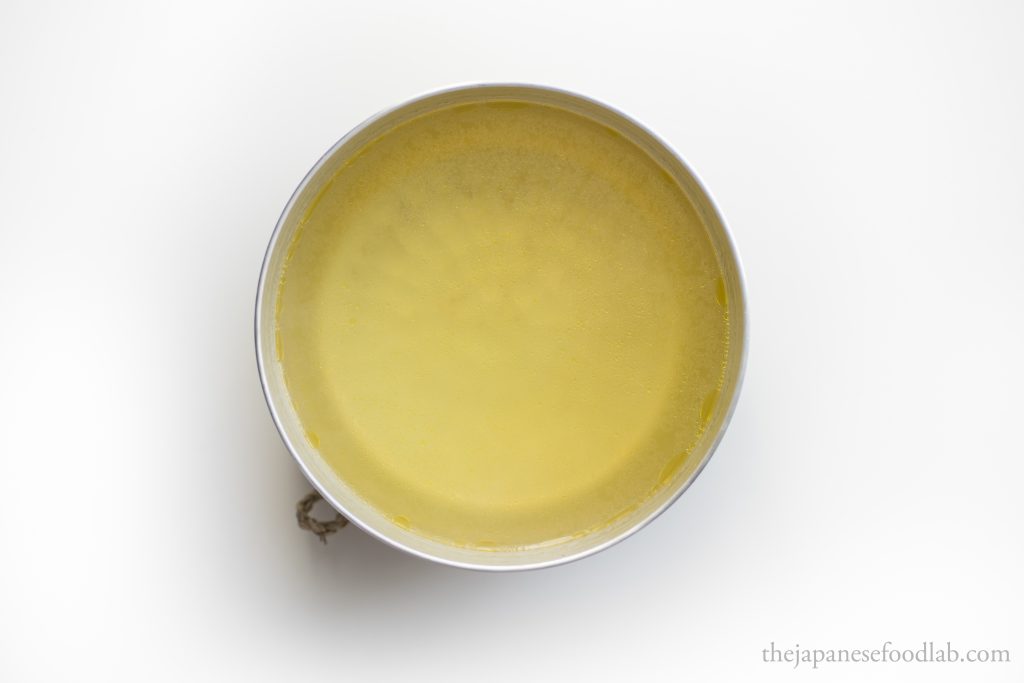
Now that you’ve blanched and removed the outer layer of skin from the different edible parts of the suppon, we’re ready to make the suppon stock. This stock serves as the base of any suppon dish and in our opinion is more delicious than the meat itself. It forms the base of any suppon nabe dishes, as well as more exotic nabe dishes like bear nabe.
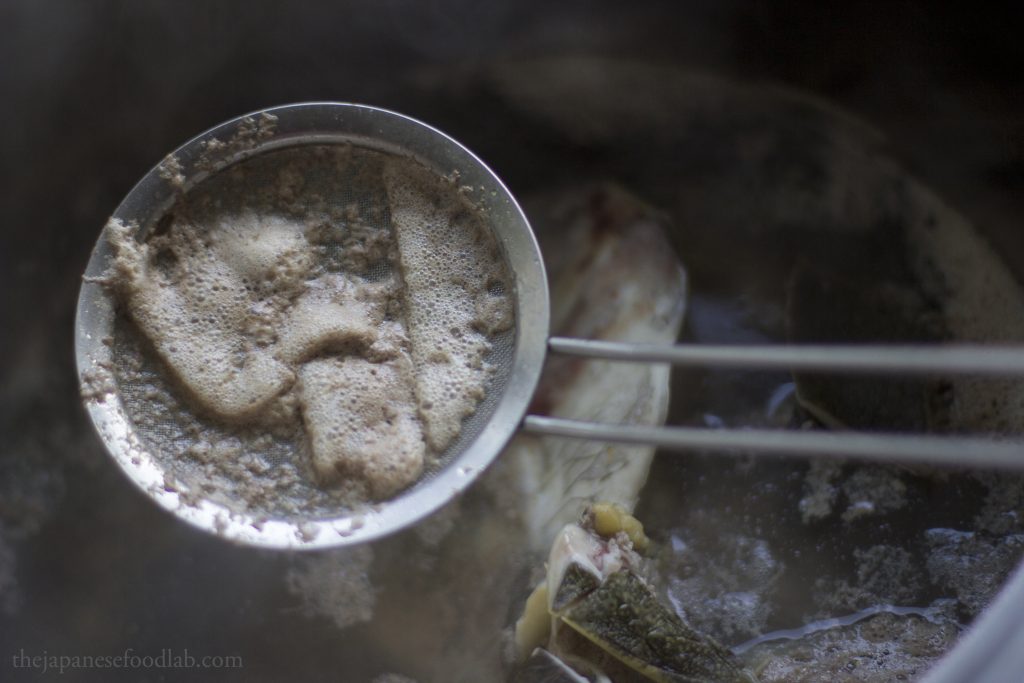
The principles to making a good suppon stock is the same as any other animal stock where the key is to keep the water at barely a simmer, whilst constraining skimming any scum or impurities that arise. If you want an extra clear soup, you can soak the suppon parts in water for 30 minutes to an hour to remove excess blood, but otherwise just immediately bring it up to a boil and then skimming the stock works.
Aromatics wise, a combination of kombu, ginger and leeks are usually used but are added at different times. Some places choose to omit the ginger to taste. Once made, the stock can be seasoned to taste with salt or light soy sauce, or further reduced to desired concentration.
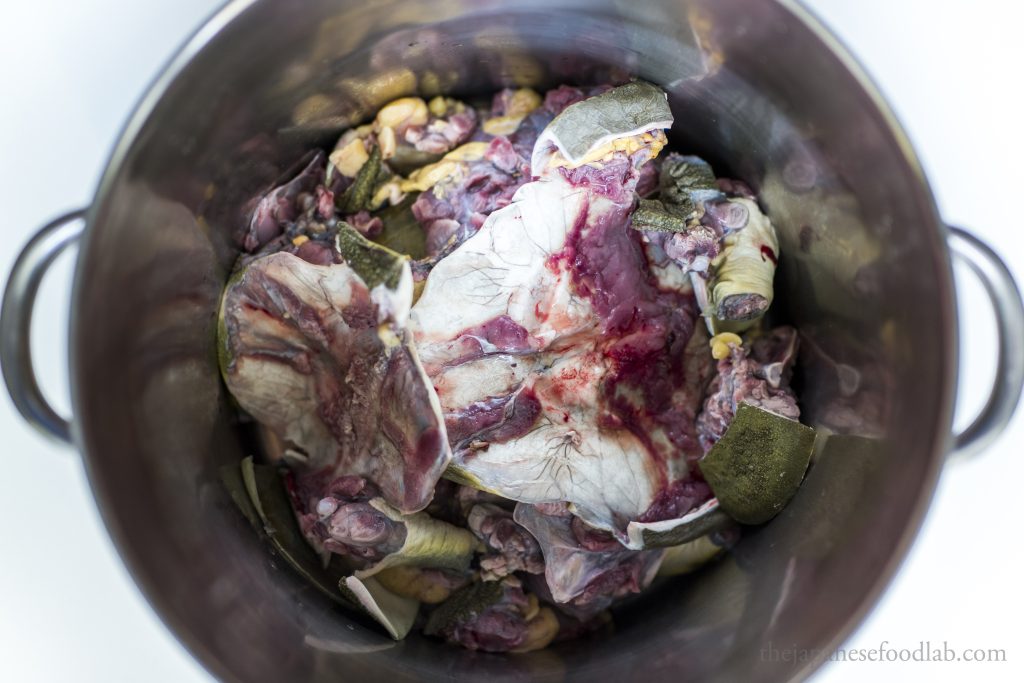
Japanese Soft Shell Turtle Stock Recipe
Meat from a 1.5kg Suppon (prepared using the instructions here, resulting meat weighs less)
2000ml of water
600ml of cooking sake
1 knob of ginger (optional to taste)
2 leeks
15g of kombu
Combine the water, sake, ginger and suppon meat and bring to a gentle simmer. Diligently skim off any solidified blood and scum for the first 30 minutes until the soup is clear. At the 1 hour mark, add in the leeks and simmer for another 0.5 to 1 hour. When the soup is full of flavour and the meat is tender, strain out the stock and discard the ginger and leeks. The stock and meat can now be chilled until needed later.
At this point, the plastron and carapace can be discarded as they no longer contain any meat. At some restaurants, the carapace is cleaned and dried, before being given to customers as a talisman to ward off bad luck and evil spirits.