To round out our series on tempura, we thought we’d cover one of the more heartwarming and comforting courses- tempura ochazuke. Freshly fried tempura served over rice with hot tea poured into the bowl.
If you’ve read our series on rice and gohanmono, you’d know that it’s common for a meal at a traditional Japanese restaurant to feature a rice course, usually at the end of the meal. Besides ensuring that customers leave satisfied that they have had enough to eat, it further showcases a chef’s ability to cook rice. A task that might appear elementary at first glance, but its simplicity means that there is nothing to hide behind, meaning that the smallest of flaws are noticeable.
When it comes to high end tempura establishments, the rice course usually consists of tendon– tempura drizzled with sweet sauce over a steaming bowl of rice. However, ochazuke is occasionally served, sometimes at the request of the customer made during reservation.
While ochazuke is the umbrella term for all rice dishes with tea poured over, like in kinmedai rice, it is specifically known as tencha (天茶) in tempura. This is not to be confused with tencha (碾茶), which are the tea leaves used to make matcha before they’ve been ground up.
Tencha (or most ochazuke for that matter) doesn’t have to be complicated and can be made using any hot Japanese tea over rice. However, the recipe here mimics what you would find at a tempura restaurant, with a little more refinement and detail.
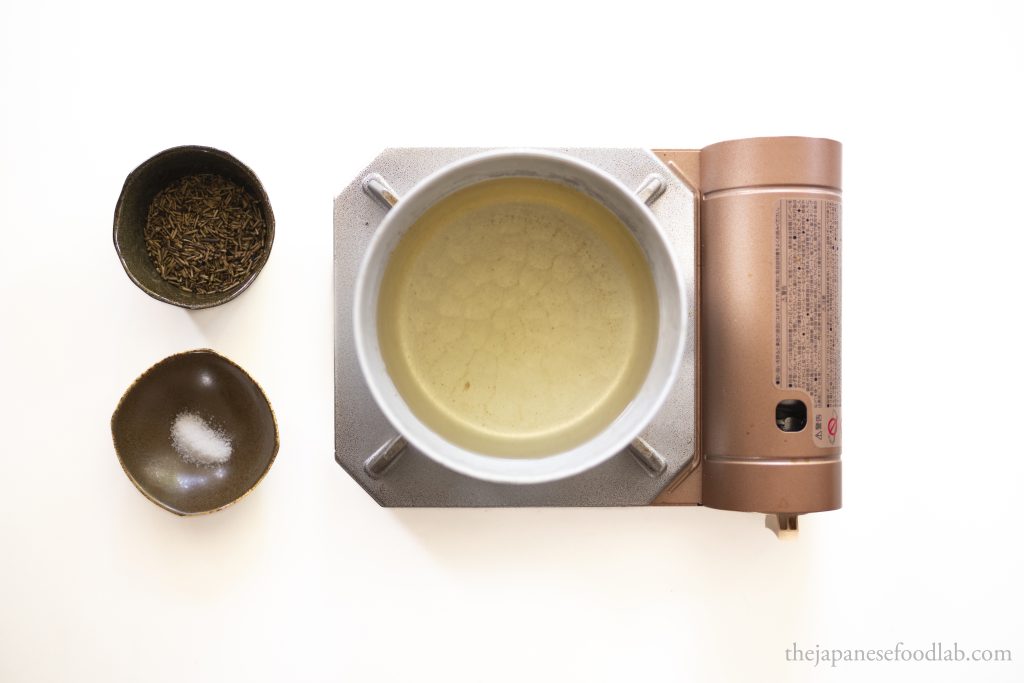
Chadashi (茶だし)
The main difference between homemade ochazuke and a restaurant version is that the tea is made from dashi rather than plain water. The resulting tea is known as chadashi (茶だし). This gives the tea a savory base to stand up to the richness of tempura, making the flavors blend together better.
Otherwise, plain tea used in tencha or other rich ochazukes can feel a bit thin when blended with oily foods. Our recipe calls for the use of hojicha, but other Japanese teas can also be used such as sencha or genmai cha. Some restaurants also add a small amount of puffed rice from the genmaicha or mitsuba parsley to the dish.
When serving tencha, plain rice is usually served with a side of grated wasabi. Once the freshly fried tempura has been placed on the hot rice, the chadashi is then poured down the side of the bowl so as to not make the tempura soggy.
Alternatively, the rice can sometimes be topped with thin slices of nori seaweed, mitsuba parsley, tenkasu, or toasted sesame seeds.
Tempura Ochazuke Recipe
Freshly cooked rice
500ml of dashi stock, ideally thick shaved katsuobushi dashi stock
8g of hojicha tea leaves
2g of salt
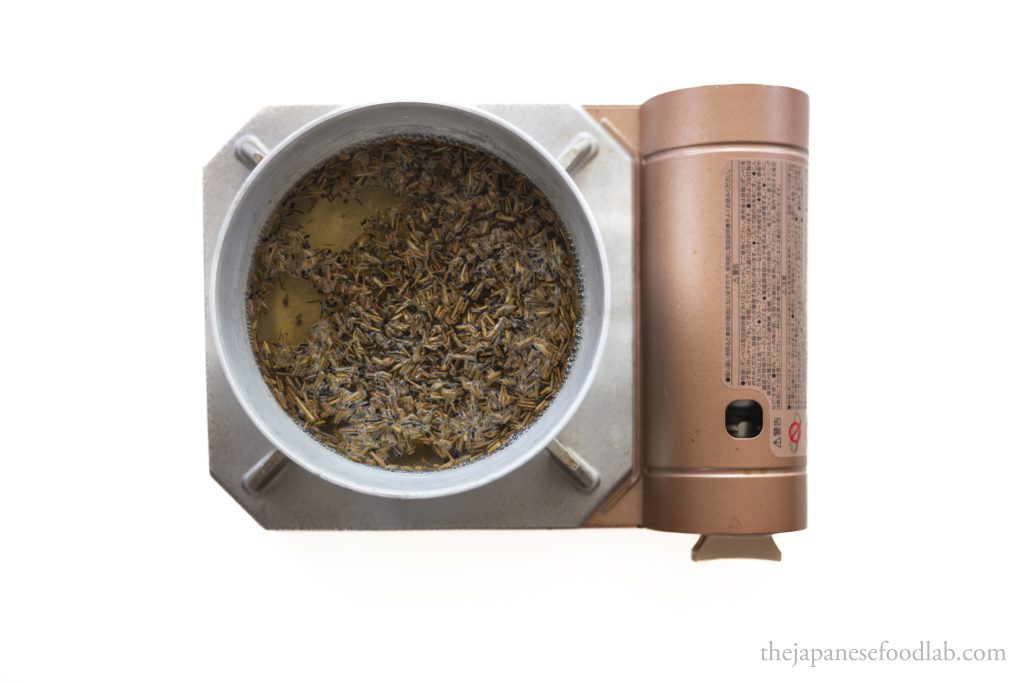
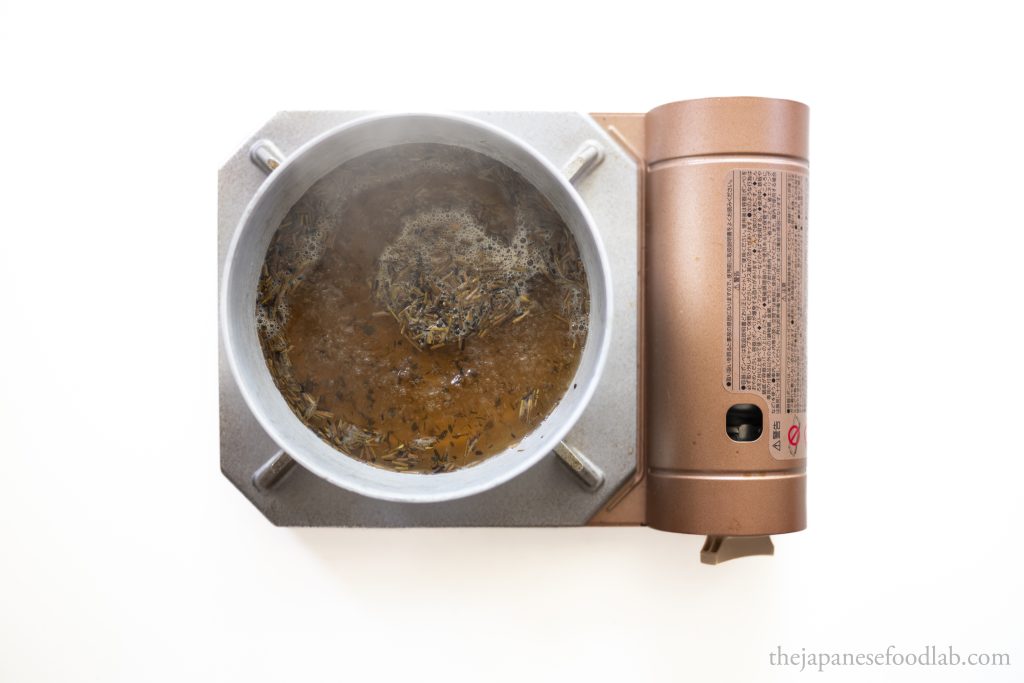
Add the dashi and salt to a saucepan over high heat, stirring the salt to fully dissolve. Bring the dashi up to 80°C/175°F and turn off the heat before adding in the hojicha tea leaves. Steep for 60 seconds before straining through a fine mesh strainer into a teapot. Serve with rice and freshly fried tempura.
Notes:
Ideally the chadashi is brewed as close to serving as reheating the tea leads to a loss of flavor. Different teas have different optimal temperatures so please look it up for the tea of your choice. Some restaurants add soy sauce instead of salt for a more savory note (8g of soy sauce instead of 4g of salt), whilst some go with a mixture of soy sauce and salt.
You might find the 2g addition of salt to the tea to be odd, and upon tasting it directly, slightly salty. However, we can assure you that when poured over rice and eaten with tempura, it balances out just nicely.
