This article is part of our series on tempura.
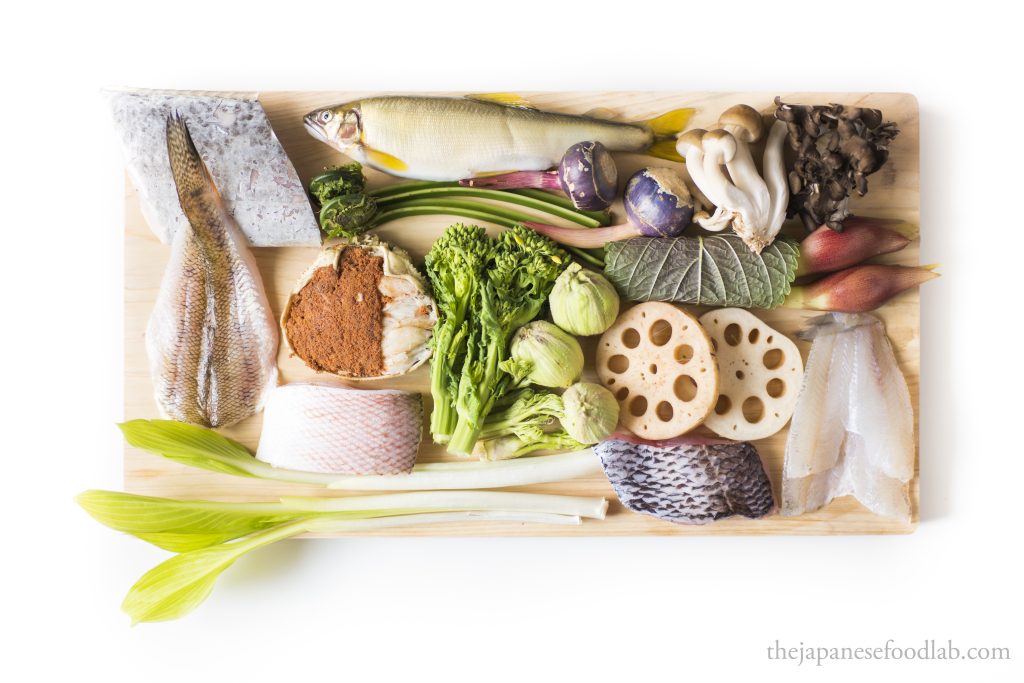
Given the common perception that tendon (天丼) is essentially freshly fried tempura over rice, it’s tempting to assume that the same cooking principles for tempura apply to tendon as well. However, serving tendon involves specific adjustments to maintain its quality.
Pieces of tempura served at a counter-seat tempura restaurant differs significantly from what you might find at a market stall or during a lunchtime rush. While both versions are equally delicious, they emphasize different culinary concepts.
Your typical bowl of lunchtime tendon is designed to be served quickly at an affordable price, targeted specifically at office workers who are looking at a hearty energy rich meal that doesn’t hurt the wallet. The quality of ingredients used are not the highest quality, but it’s made up by the variety of ingredients and style of frying. A typical tendon meal would include several types of fresh vegetables and seasonal seafood tempura, arranged aesthetically together in a bowl on top of the rice. Tendon sweet sauce is then poured over the tempura, before a lid is placed over the bowl to keep it warm, and then served to customers. Most places offer different sets or add-ons that you can choose from, such as with additional shrimp, egg and the most famous anago sea eel.
While this serving style allows for a quick and efficient meal, it’s horrible from a perspective of keeping tempura crispy. The steam emitted from freshly fried pieces of tempura can be trapped and reabsorbed by the close adjacent pieces, leading to the batter becoming soggy. This isn’t helped by the lid that traps escaping steam that then condenses and drips back down. The sweet sauce also quickly soaks into batter.
To counteract this, the batter used in tendon is much thicker due to a higher level of gluten development in order to remain crunchy for longer periods of time given that all the tempura is served at once and to allow it to absorb the tendon sauce without going soggy. The oil also uses a larger proportion of roasted sesame seed oil to mask any off flavors given that the frying oil would be reused many more times compared to a high end restaurant. Let’s explore the differences in more detail.
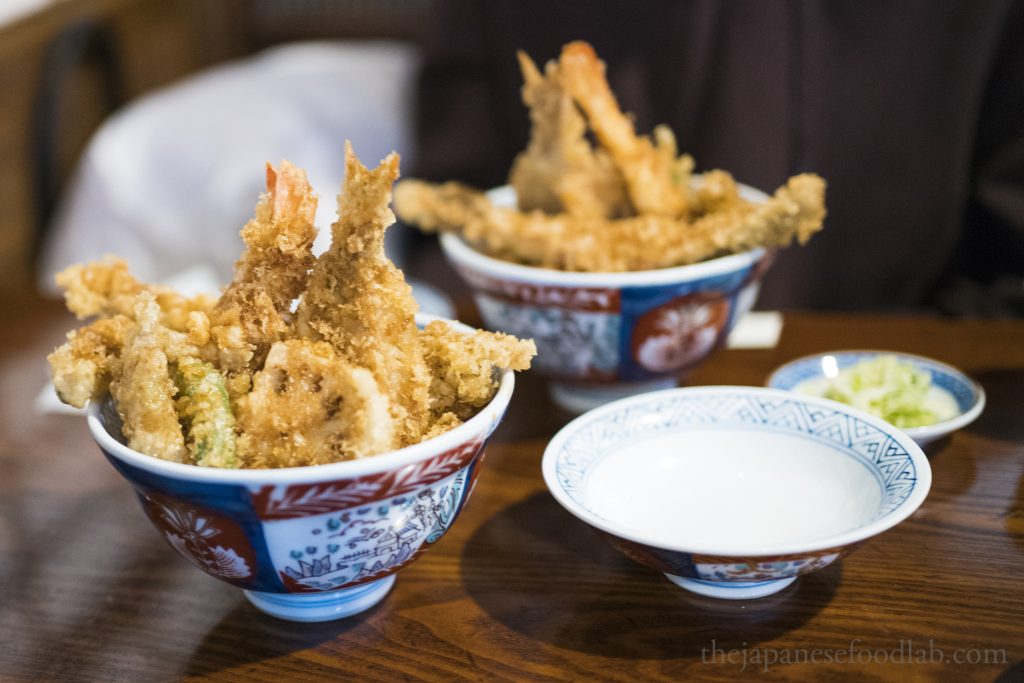
Differences in moisture content
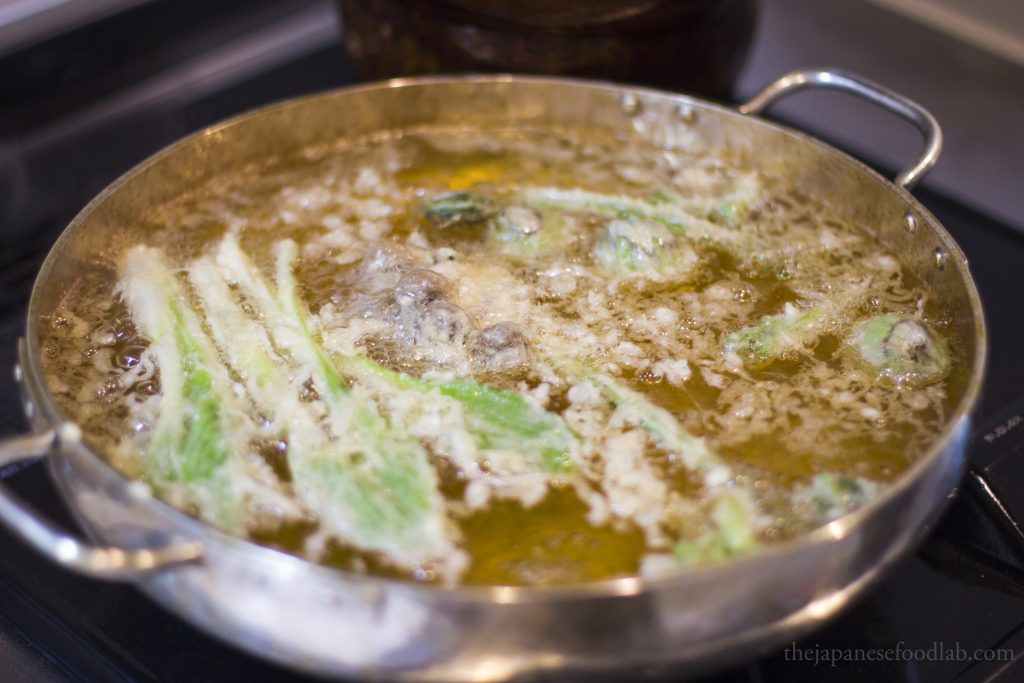
When you deep fry a piece of food, the bubbling of the food in the oil is actually the water from the food boiling. As the entire piece of food is submerged in oil, the steam from the water boiling has nowhere to escape other than to leave the food through the batter in streams of bubbles. It is this stream of bubbles that provide outward moving propulsion, thus preventing the oil from penetrating the food and making it oily.
At a high end tempura restaurant, you would remove the tempura from the oil the moment it is cooked, when it is perfectly steamed on the inside, still retaining all the internal moisture that gives you that burst of flavor from the first bite. You’d never think to fry it longer, and if you did, you’d notice the stream of bubbles leaving the food would gradually become smaller and smaller as all the moisture starts to evaporate, with it taking away all the more volatile and nuanced aromas and tastes that make higher quality ingredients unique, especially vegetables. But keep in mind, tempura served in this kind of restaurant is designed to be consumed immediately, piece by piece as the chef fries each piece with utmost care. If left sitting on the countertop, the remaining moisture would soak into the fried batter, causing it to go soggy.
At a tendon restaurant, the batter recipe isn’t hugely different, but we’d argue that tendon restaurant fry their tempura more thoroughly to remove as much steam as possible so that there is no excess moisture to make their batter soggy, which is especially important when they’re going to be piled high in a single boil. This is done at either a higher temperature, or by leaving the pieces in the oil for longer. Therefore, the ingredients tend to be cooked to a more done degree, and can be a little drier in texture.
This is coupled with the fact that tendon restaurants do not have the luxury of time to create small batches of batter which they remake over and over again. Instead, they usually make one huge batch of batter. As time goes on, the gluten in the batter continues to develop past what is considered peak consistency in a fine dining restaurant, which a tendon restaurant would compensate by frying the pieces for longer to crisp it up.
What results is a piece of tempura with a much thicker coating of crispy crust resulting from longer frying times and greater gluten development, which is optimised for piling onto steaming white rice and being drizzled with sauce without going soggy. It is not however, optimised for enunciating the flavour of individual ingredients, nor is it in our opinion, the purpose of a tendon bowl to begin with.
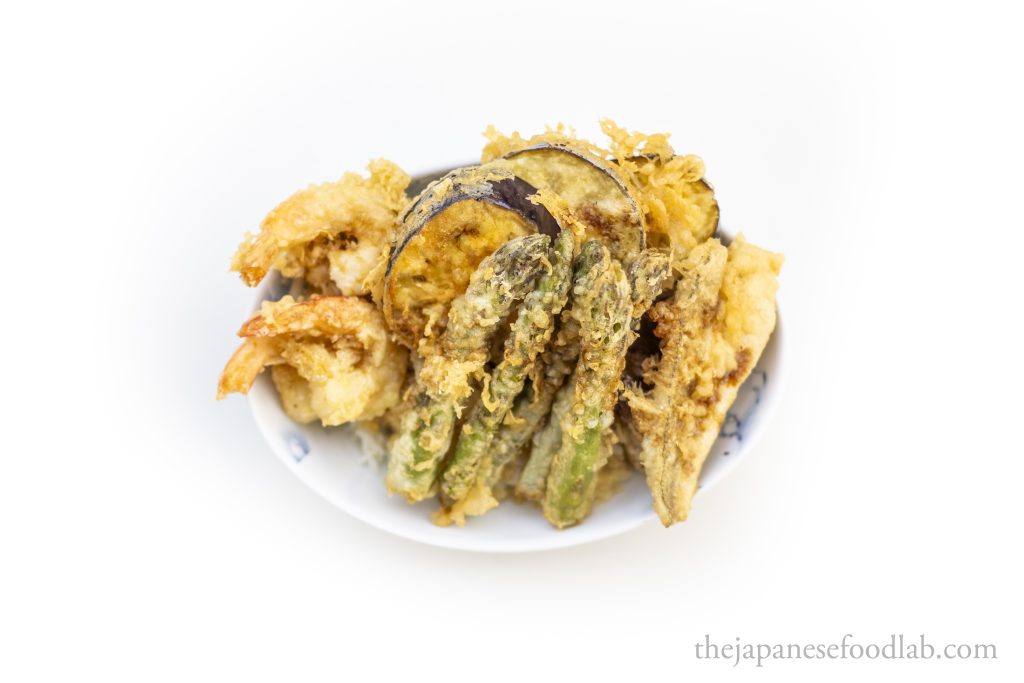
Difference in caramelisation
The much deeper amount of caramelisation they get on their tempura crust is also related to how they reuse oil to keep costs low. Oil is hydrophobic and does not mix well with water. In fact, tempura fried in fresh oil actually spends very little time in contact with the hot oil. This is because the stream of bubbles emitted from the tempura actually act as a barrier to the oil as the steam inside the bubbles cannot mix with the oil.
As oil is reused over and over again, it starts to degrade. Some of the many molecules produced during this degradation are emulsifiers that help oil mix with water better, thus allowing the hot oil to be in contact with pieces of tempura. This is why restaurants like Tempura Kusunoki change their oil frequently to obtain the lightest fry possible, while at a tendon restaurant, you get a darker and deeper fry.
If you were to compare the same piece of tempura fried at the same temperature for the same duration of time in new and reused oil, the tempura fried in the reused oil actually spends much longer in contact with hot oil, resulting in more caramelisation, more moisture loss, and a crust that maintains its crispiness for longer.
Diverging Styles of Tempura
In the past, there wasn’t a huge difference between the style of tempura you’d find at a lunch rush tendon spot compared to a multi course restaurant other than quality of ingredients. However, high end tempura restaurants today have been trending towards batters that emphasize the taste of the ingredients whilst having a light, melt in your mouth texture. Restaurants like Tempura Niitome have been developing and championing this school of tempura through techniques such as ultra-low temperatures to inhibit flour gluten development, and more frequent batter and oil changes. This kind of tempura, as revolutionary as it is, would quickly become a soggy mess if piled high together in a bowl of tendon. Tendon on the other hand, has trended towards thick crispy batters that give you the same kind of deeply primal satisfaction like eating fried chicken- messy, uncomplicated and rough around the edges but satisfying. Neither style is superior and both are delicious in their own right.
We’ve always liked to think of differences as analogous to shoes. You’d never choose to compare a fine pair of shell cordovan leather shoes to the running shoes used by an Olympic runner, even if they’re technically both shoes that have had a significant level of effort put into their design. The leather shoes, akin to fine dining tempura, are meticulously crafted from the finest materials by skilled craftsmen, but would be completely ruined if taken for a Sunday morning run up a hill. Conversely, the running shoes, akin to tendon, have had the latest materials technologies built into it to minimise impact and increase energy efficiency, but would be out of place in a formal setting.
The implications to you however, is that if you’re trying to replicate the tendon bowls you’ve tasted in Japan, you’ll want to use the same batter recipe, but try frying it for longer to ensure a well formed crust coats the ingredients and prevents it from going soggy. To replicate a similar aroma, add a higher amount of roasted sesame seed oil to your frying oil.
