To ensure that their diners leave satisfied at the end of a multicourse meal, most high-end restaurants in Japan serve some form of a rice course to close out the meal. For tempura, this is usually tendon, but occasionally ochazuke is served.
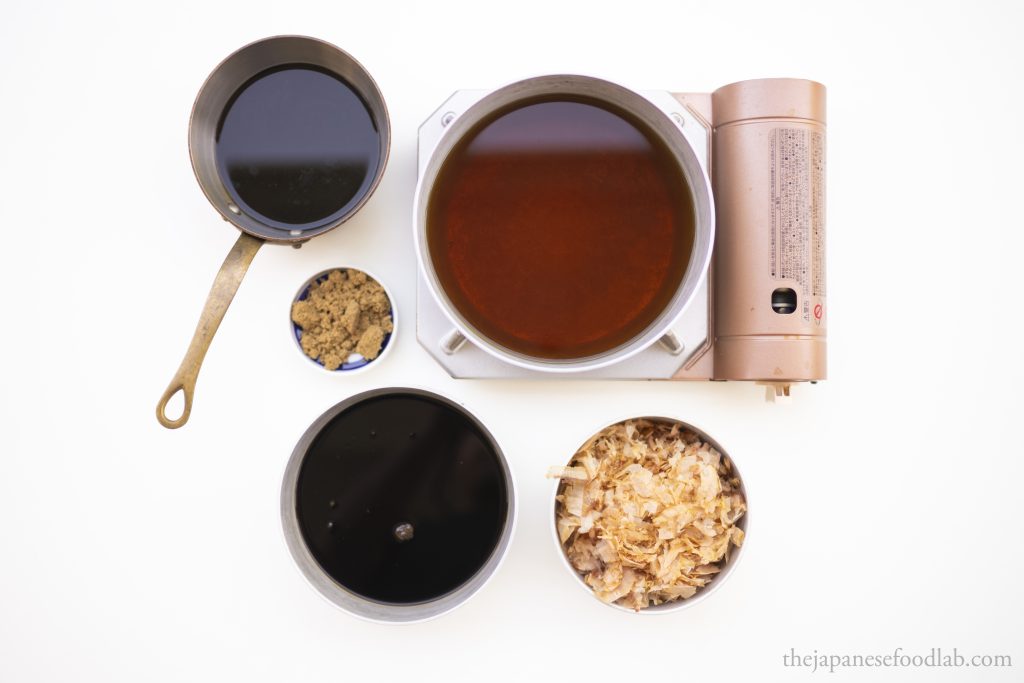
The word tendon (天丼) refers to any kind of tempura served over rice. At a specialty restaurant this typically refers to a disk of kakiage on rice, but also includes the large satisfying bowls of rice heaped with various kinds of tempura you’d find served at a lunch rush restaurant.
What they do share in common is a thick sauce that is drizzled over the tempura known as tendon tare (天丼タレ). It’s usually made from the same ingredients, soy sauce, sugar and mirin in a 1:1:1 ratio known as a kaeshi, before being diluted with dashi reduced down to the restaurant’s desired consistency. Now, it is more and more common for restaurants to make their tendon sauce from scratch directly.
A lot of articles in books and on the internet will simply call for tentsuyu to be used as the sauce for tendon but in our opinion it pairs better with more delicate preparations of tempura you’d find at specialty restaurants as it is not a reduced sauce and is fairly light. In contrast, tendon, with its much thicker battered crust layer and use of deeper roasted sesame seed oil, requires a richer sauce.
If you want a traditional recipe that would be made using the kaeshi ratios above, read our article from the famous restaurant Dote no Iseya. Otherwise, this recipe is one that is used by several Michelin tempura restaurants that serve tendon at the end of the meal and is not as sweet and thick. It is hugely different from a typical tendon tare in that it starts by making a katsuobushi dashi that uses an extremely concentrated base of cooking sake and mirin instead of the usual water. Once the dashi is made, soy sauce is then added and simmered for a while longer. It’s a simple recipe to execute, but we’ve included some finer points in the notes that we feel are consistently missing from other tendon tare recipes and are more important than the recipe itself.
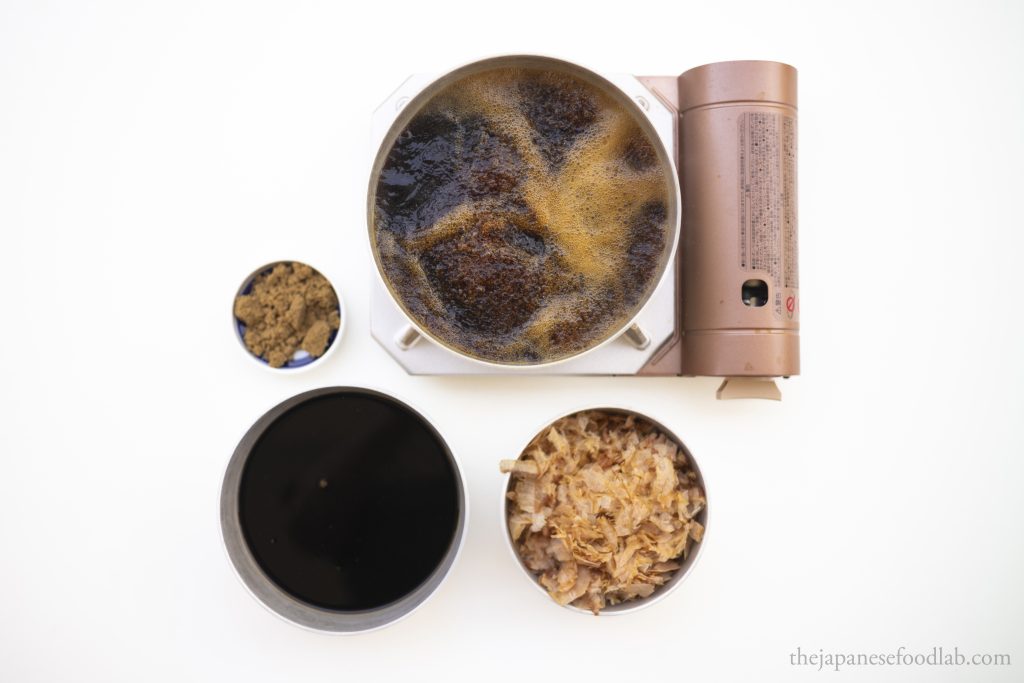
Tendon Tare Sauce Recipe
1000 ml of sake
600 ml of soy sauce
400 ml of mirin
400ml of water
20g of thinly sliced katsuobushi flakes
Combine the mirin, water and sake into a pot and bring to a vigorous boil until all the alcohol has evaporated. If using a fire stove, be careful as the large amount of alcohol in this recipe can easily catch fire and ignite. You’ll know the alcohol has fully evaporated when the flame dies out.
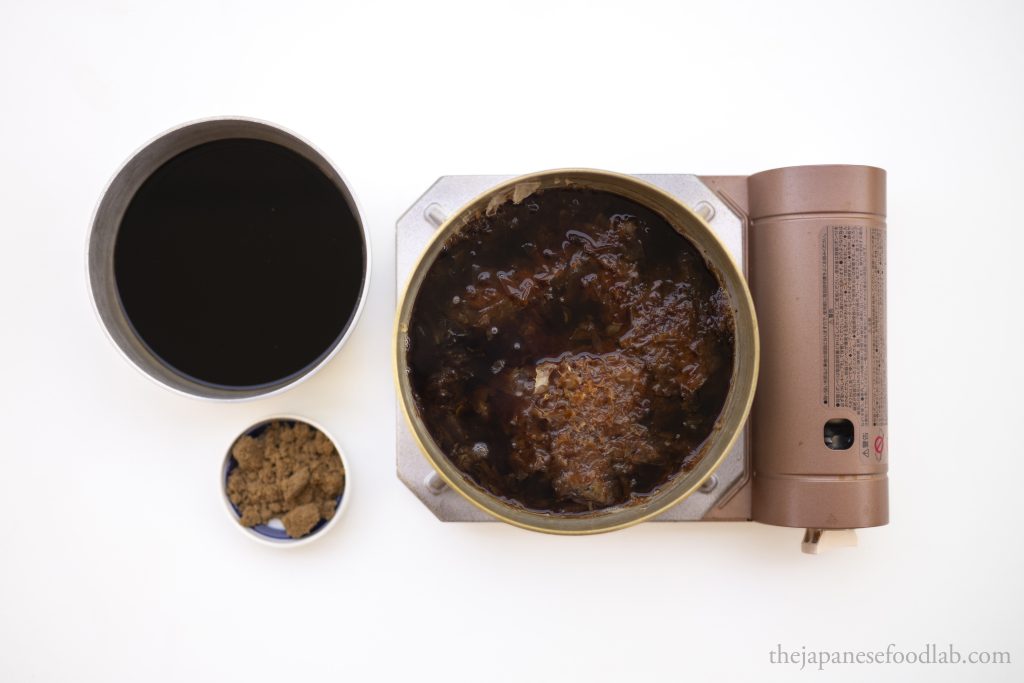
Turn the heat to a low simmer and add in the katsuobushi flakes all at once and bring back up to a simmer for 5 minutes. Add the soy sauce and boil for 6 more minutes, skimming any scum that rises to the surface. Strain through a fine mesh strainer or cheesecloth and allow to cool. The sauce is immediately ready to use but tastes better the day after. When not in use, store the sauce in the fridge and reheat to at least 72°C/161°F for at least a minute each time you use it.
Notes:
You’ll notice that this recipe calls for you to boil the katsuobushi flakes, which is not typically done when making dashi from thinly shaved katsuobushi. However, given the strength of the taste from mirin and sake, any harsher tastes from boiling the katsuobushi isn’t as noticeable so it’s a good way to increase the umami of the tare without any additional ingredients.
If you wish for a sweetened version that is used in some famous tendon restaurants, add 25g to 110g of sugar to the mixture before boiling it down. The sugar is added together with the soy sauce. Some places may even choose to add brown sugar instead of white sugar to add to this taste.
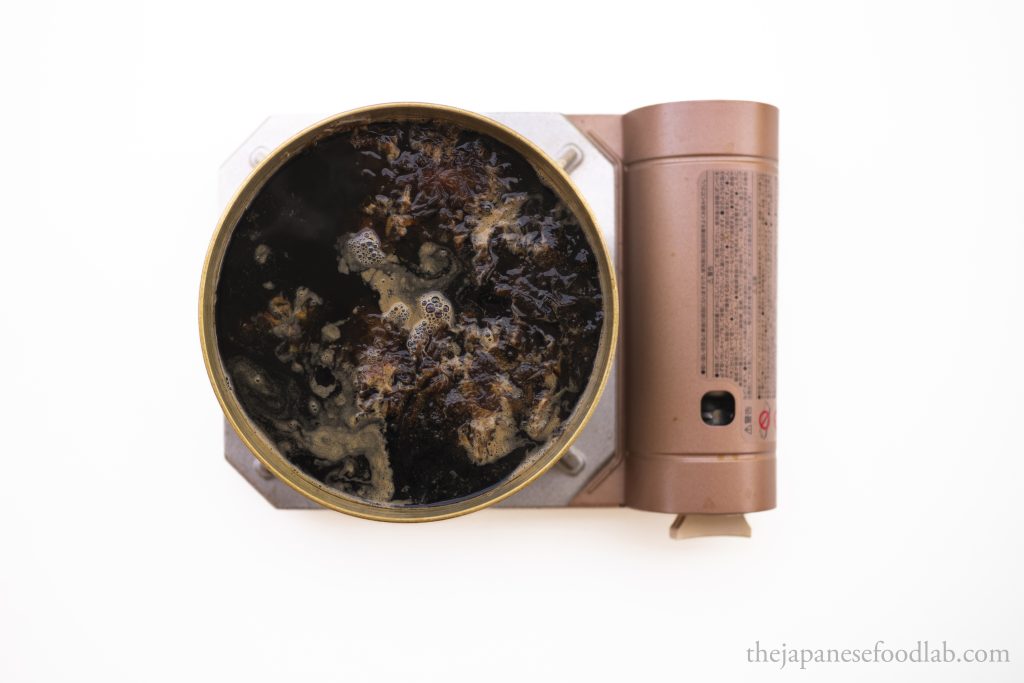
One of the key nuances of this recipe that is often overlooked is the combination of using a pot that fits the amount of liquid and the use of high heat. As the mixture reduces and thickens under a vigorous boil, the increase in viscosity allows it to bubble higher and higher, usually causing panic to the home cook. However, this is a crucial part of the cooking process. If the heat source is much larger in area than the cooking pot itself, the sides of the pot will become much hotter as the heat climbs up the sides. When the liquid bubbles up, it comes into contact with the sides of the pot and a much faster caramelisation process occurs, giving the sauce its characteristic toasty and deep flavor. Most restaurants actually encourage this by using a yattoko pincer pot. As these pots do not have a handle, it is possible to put them on a large burner so that the flames climb up and lick the sides of a pot, causing it to reduce and caramelize quickly.
We recommend experimenting a bit with this recipe to see what works for you. Here, a fine balance needs to be struck between allowing it to bubble vigorously versus having it boil over or even burn from excess heat. You’ll want to keep the liquid at a constant boil but as the liquid reduces, you’ll need to slowly turn down the heat as it gets more and more vigorous. You can reduce it down to 70% if you like your sauce extra salty, but if you feel like you’ve over reduced it, you can dilute it back down with a little dashi stock.
In many restaurants, the remaining tendon tare from the previous batch is added to the new batch to make a ‘perpetual’ sauce that never runs out, but is instead constantly added to. You’ll find this done in both yakitori and unagi stores as well and is safe so long as the sauce is heated to the pasteurization temperature of 72°C/161°F for at least a minute each time. For this recipe, the previous batch of tendon tare is added with the soy sauce after boiling the soy sauce for 6 minutes and allow to boil for 5 more minutes before straining to ensure both sauces are fully integrated.
