This article is part of our tempura series.
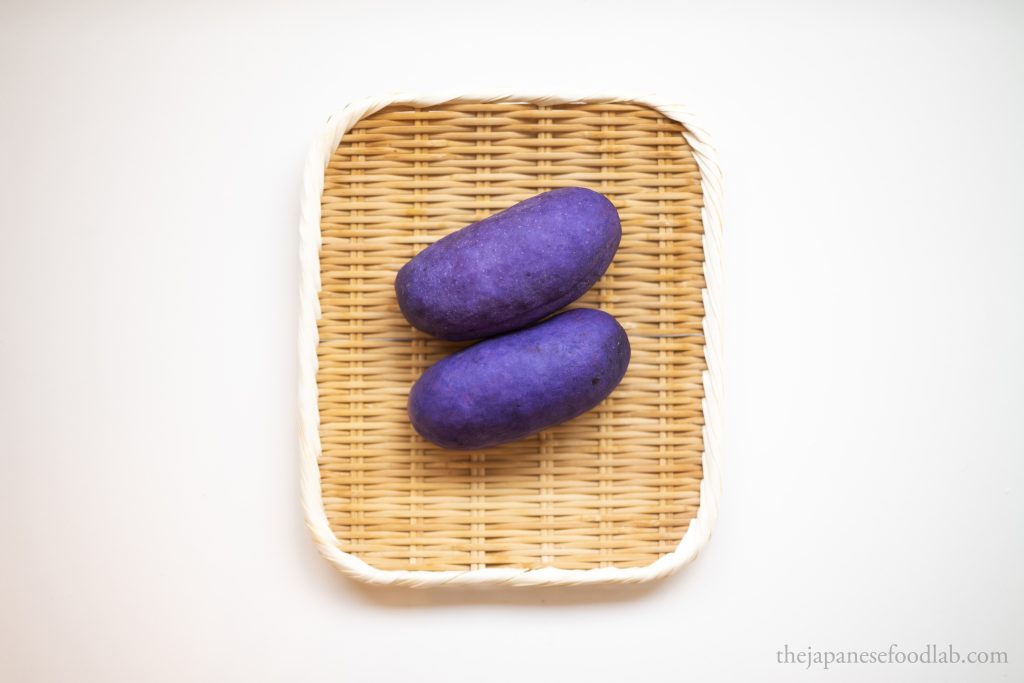
Probably one of the most distinctive fruit that is still relatively unknown to the English speaking world, the Akebi (あけび) fruit is one of the more rare tempura preparations given its short seasonality and shelf life. Known in English as the chocolate vine, the name is slightly misleading as it refers to the flowers of the plant, which smell faintly like chocolate. The fruit however carries no such smell but is instead a vibrant purple colour, with white flesh and an inner pulp with black seeds.
The pulp itself is what most people, typically children, usually enjoy scooping out and eating due to its lightly sweet and mildly floral yet refreshing taste. However, for us, we are interested in the outer rind and flesh itself, which is distinctly bitter and vegetal but develops into a nutty aroma when fried correctly.
The Akebi vine grows wild in the mountainous areas and flowers during spring, with the fruit maturing during the autumn months. When it is at peak ripeness, the purple fruit browns slightly and splits open to release its seeds. It is at this moment that the pulp surrounding the seeds is at its sweetness. Here the fruits are sometimes harvested and hollowed out before being stuffed with minced meat, miso, walnuts and some vegetables, ready to be grilled or pan-fried.
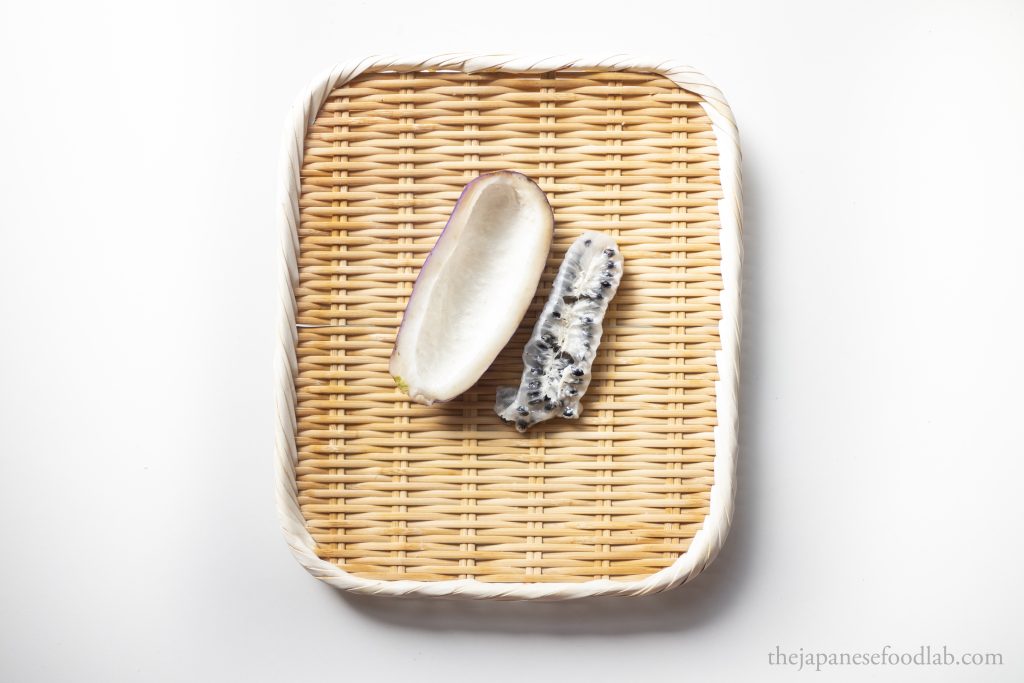
So whilst it’s generally assumed that the season for Akebi is in the autumn, you’d be surprised to hear that it is served at tempura restaurants in the late summer. This is because the texture of the Akebi when fully ripe tends to be too soft and fragile to retain a pleasant bite when fried as tempura. During late spring to early summer the fruit are still green and inedible but after a few months of growth, when they are at their most vibrant purple stage, but before the seeds inside have developed enough to split open the fruit, its texture is at its peak and therefore prime for frying.
Whilst historically people have foraged this fruit, it is possible to order from fruit shops online or sometimes available to buy at high end supermarkets for 3 to 4 weeks during peak season. When choosing, be sure to pick those that are firm to the touch with the most weight to them.
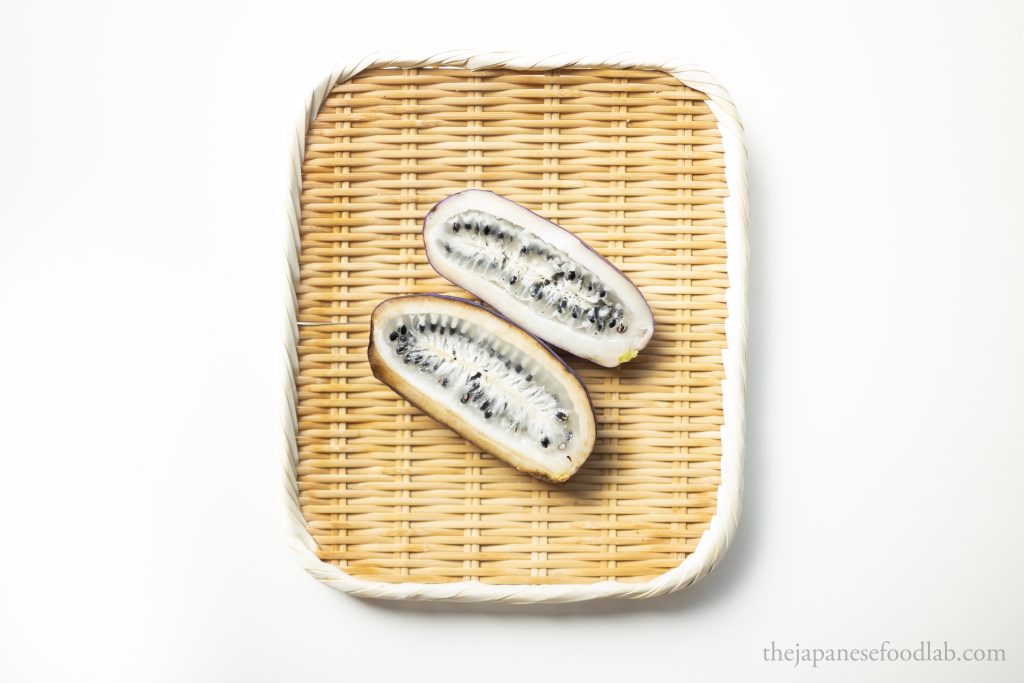
When frying into tempura, you want to cut the Akebi as close to frying as possible as just like apples, they undergo enzymatic browning once exposed to oxygen. In Akebi, a naturally occurring enzyme called polyphenol oxidase uses oxygen to oxidise phenolics which then polymerise together into brown pigments. It even occurs faster than you’d expect in fruits because of the Akebi’s lack of acidity, which usually slows down the browning.
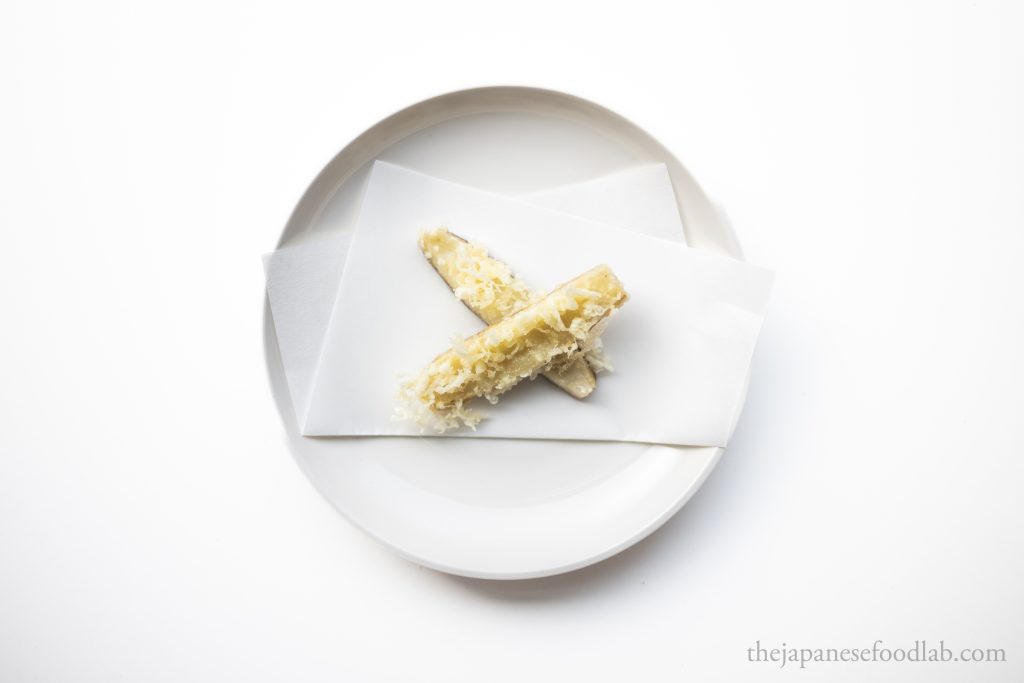
Akebi Tempura Recipe
- 1 egg (~50g without the shell)
- 200g of cold water
- 100g of cake flour
- Akebi fruit
Cut the akebi lengthwise and quickly use a spoon to scoop out the pulp and seeds. Cut the halves into equal strips, around 3 strips per half.
Prepare the batter following our guide to tempura batter. For advanced batters, this can be made using a thin batter as per our tempura batter variations article.
Heat your tempura oil in a pot to 180°C, coat the akebi in cake flour and then batter and gently lower into the oil.
Fry until the bubbles emerging from the oil start to become smaller.
Remove from the oil and place onto tempura paper to remove any excess oil and serve immediately.
