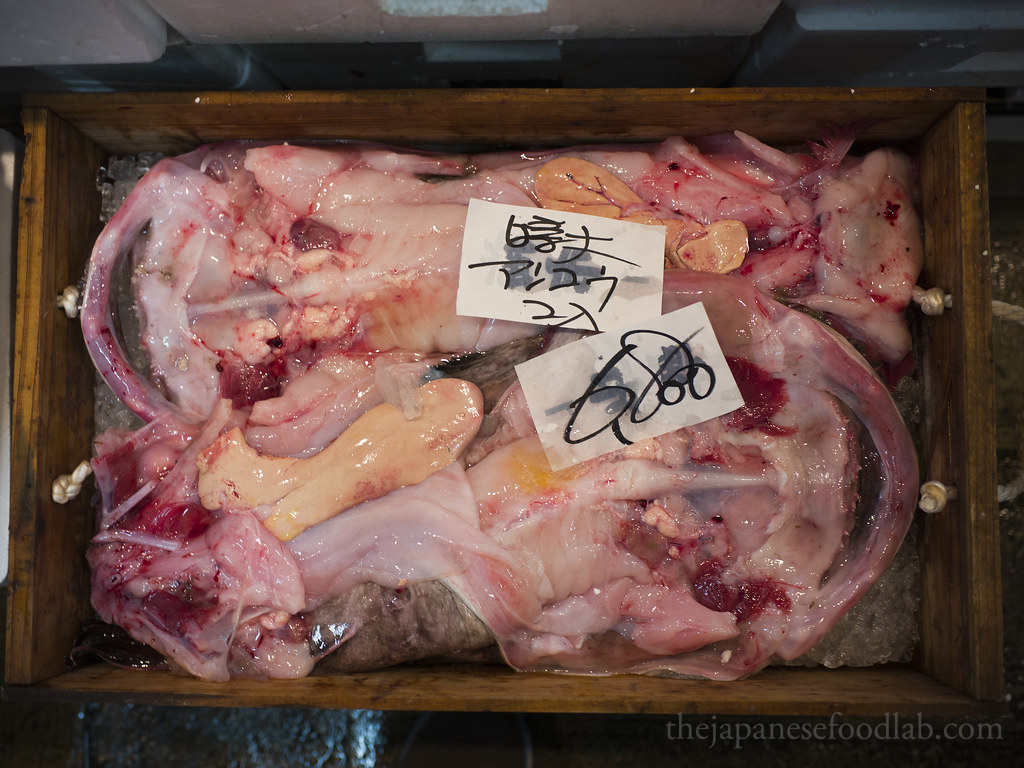
My most favourite memory eating monkfish was wayback when I first started staging in London whilst studying my degree at Oxford, taking a 2.5 hour commute each way between shifts. On the rare occasion that we’d go to the Billingsgate Fish Market at 5am, we’d sometimes be lucky enough to find a box of baby monkfish tales for 4 pounds, that we’d buy for staff meals. Back in the kitchen, an amazing chef that used to look out for me would then make the most amazing monkfish curry for us, a dish I’ve dreamt of recreating one day. If the kitchen had space and chefs allowed, I’d even buy a box for myself and bring it back to my dorm in Oxford, carefully portioning out the tails into ziplock bags and freezing them to make into miso soup on my days off.
So It’d be no surprise that when I got to Japan I immediately wanted to learn about Monkfish as much as possible, and have fond memories of making Ankonabe with my sister whilst on a cycling trip near Fukui and Tojinbo.
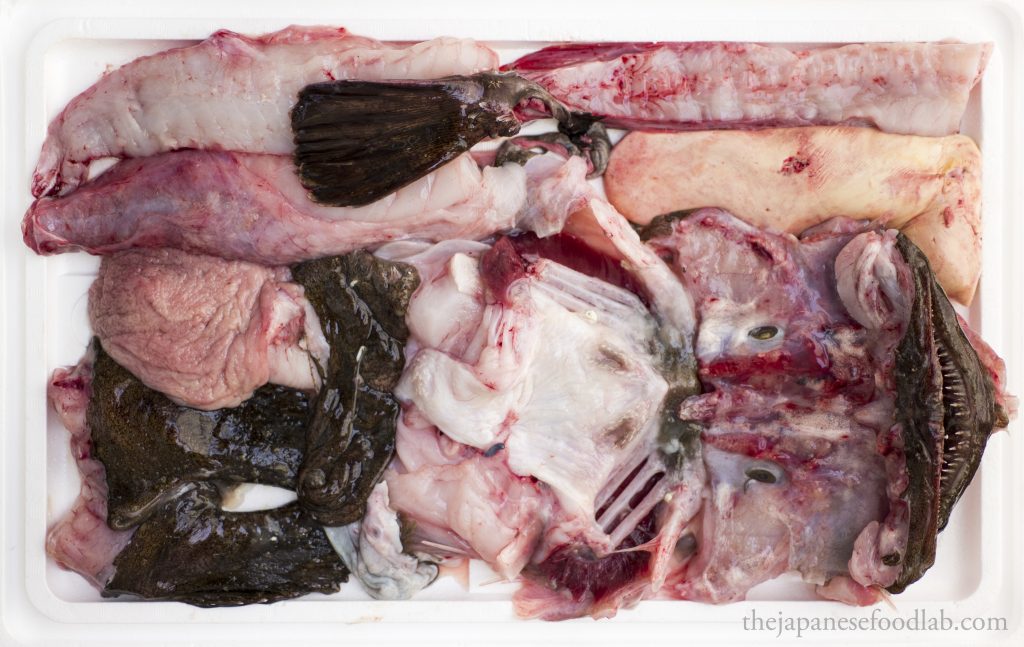
Whilst most countries I’ve been to simply cut the tails off and discard the rest of the fish, Japan has a particular nose-to-tail approach to preparing monkfish, developed long before the term and trend of nose-to-tail dining was even coined. The monkfish is hung on a hook and filleting using a technique known as anko no tsurushigiri (鮟鱇の吊るし切り), with each part and innard valued for its unique taste and texture, with the seven most valued parts known as the 7 treasures of monkfish. We hope you enjoy this mini-series on Japanese Monkfish.
The 7 Japanese Treasures of Monkfish
How To Fillet and Prepare Monkfish Using the Tsurushigiri Technique
The Ultimate Ankonabe Recipe
Isegen’s Ankonabe Recipe
Monkfish Kimchi Nabe Recipe
