This article is part of our miniseries on monkfish.
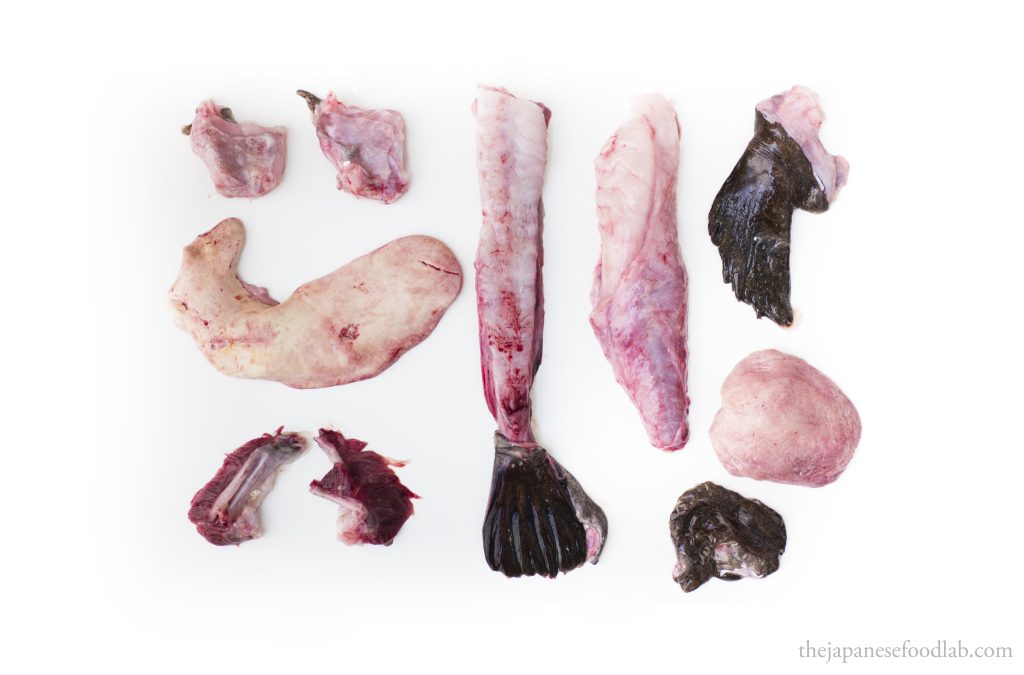
As with our article on the nine tools of tai sea bream, we love exploring a good traditional culinary classification of anatomical parts, which has led us to none other than the seven tools of Japanese Monkfish. However, unlike tai, where the tools refer to bones, the monkfish tools here refer to the seven most prized part of the monkfish.
In our opinion, the way monkfish is consumed in Japan is the embodiment of the spirit of nose to tail dining. Where in many Western restaurants only the tail of monkfish is consumed, almost every part other than the jaw and spine of the monkfish is eaten. Know as ‘anko no nanatsu dogu’ (鮟鱇の七つ道具), each part has a different texture, fat content and culinary role, making it one of the more unique fish that one can learn to prepare. On a side note, we’re not sure where we’ve heard it before, but we swear it was mentioned several times before by people in Japan, but we thought they were called the seven treasures (七つの宝) rather than tools.
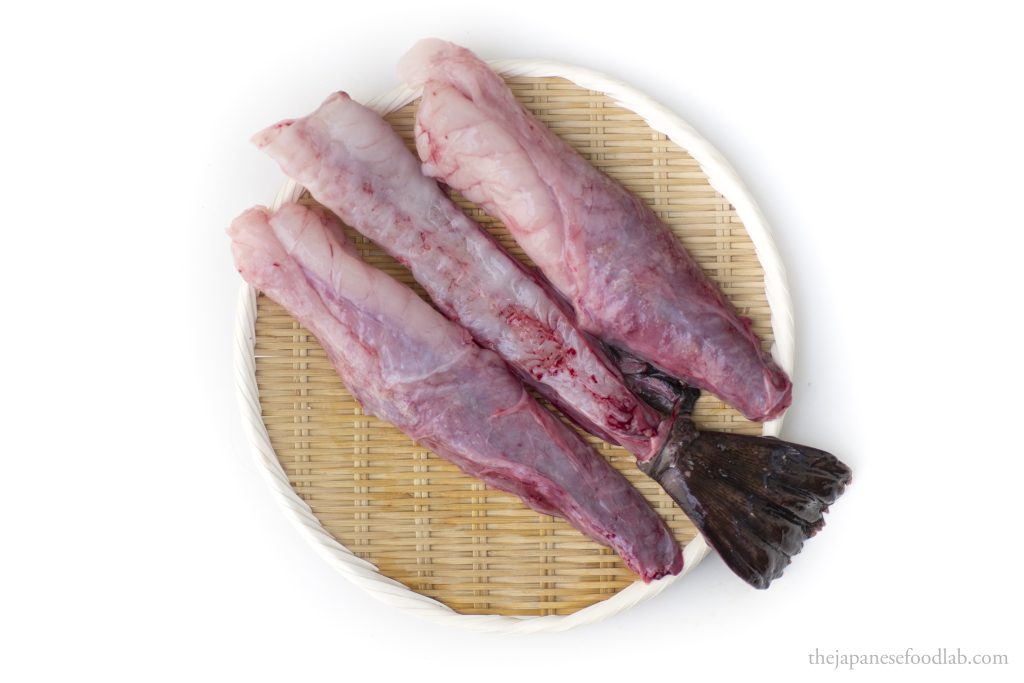
1. Tail Meat (Yanagimi/柳身)
This is the part most people outside of Japan are familiar with. Know previously as the poor man’s lobster due to it’s lean white flesh, the price of monkfish tails has been increasing over the years as people learn to value its texture. It is a pale, lean white flesh with no strong flavour which does not flake. This makes it ideal for longer cooking methods like stews, nabes and curries, but not for lighter preparations like steaming and sashimi. This characteristic is particularly useful from a culinary point of view as there are not many fish that have this texture of meat that is suitable for harsher techniques.
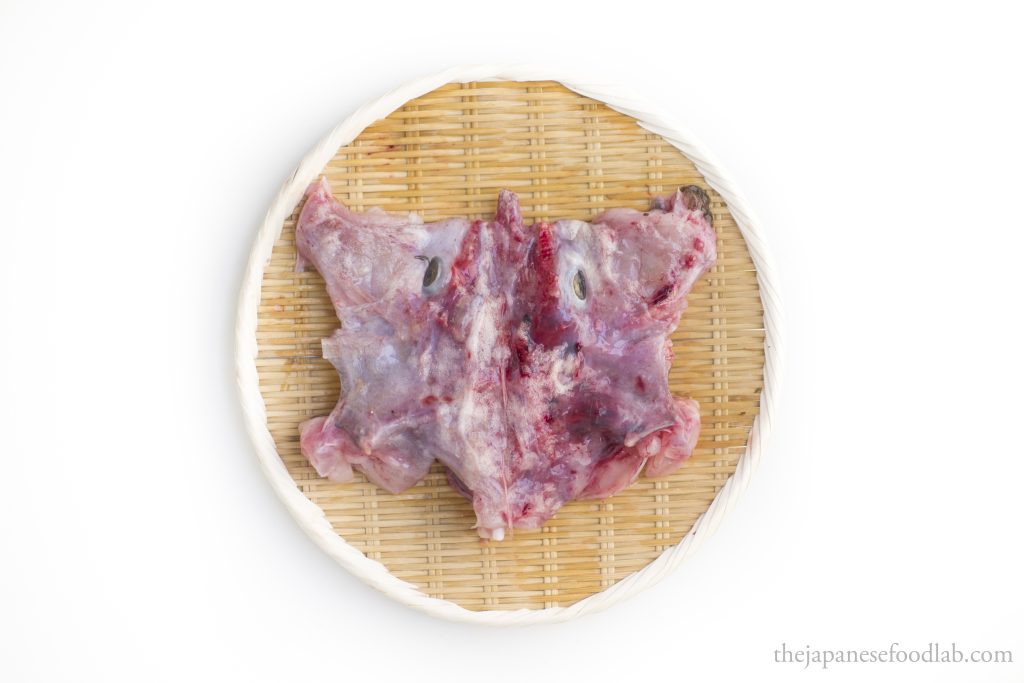
Ocassionally the cheeks from the face are included as part of the tail meat.
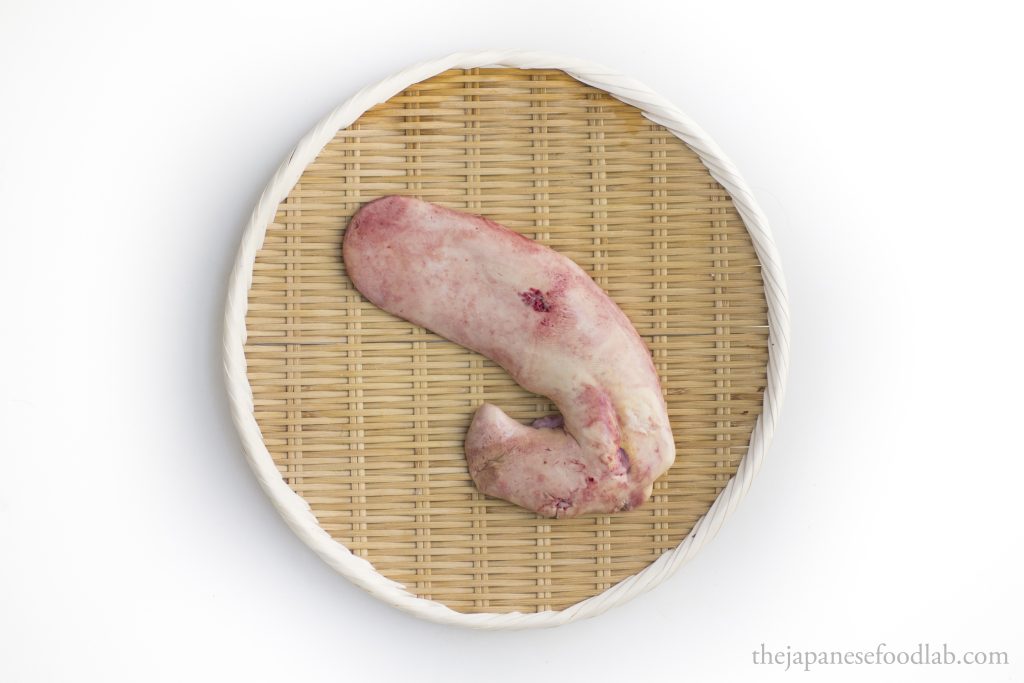
2. Liver (Kimo/肝)
This is the most prized part of the monkfish, and arguably one of the most versatile parts. Monkfish have extraordinarily large and rich livers with an almost custard-esque richness and distinct marine taste. It is sometimes referred to as the foie gras of the sea, where it is prepared into a steamed torchon and served with ponzu. And just like preparing a normal duck foie gras, it needs to be deveined before being rolled into a torchon, but with the added complexity of sometimes needing to remove any anisakis parasites that have burrowed into the liver.
Instead, our most favourite way to consume monkfish liver is ground up into a paste and fried with miso and oil, it is what gives ankonabe it’s characteristic taste. Combined with a dashi of katsuobushi and kombu, The emulsion creates and incredible depth of flavour and mouthfeel that would rival any french stock.
There is also a preparation called tomoae (鮟鱇のとも和え), where the different parts the the monkfish are coated in a dressing made from the liver.
Whilst monkfish is available all year round, the liver is particularly tasty during the winter when it becomes fuller and richer. Fresh monkfish liver should be a light cream colour with no blemishes. Sometimes it is possible to buy it frozen as well, but can take on a darker, orange like colour as the fat oxidises. A little bit of oxidation is expected during freezing, but too much can affect the taste of the dishes.
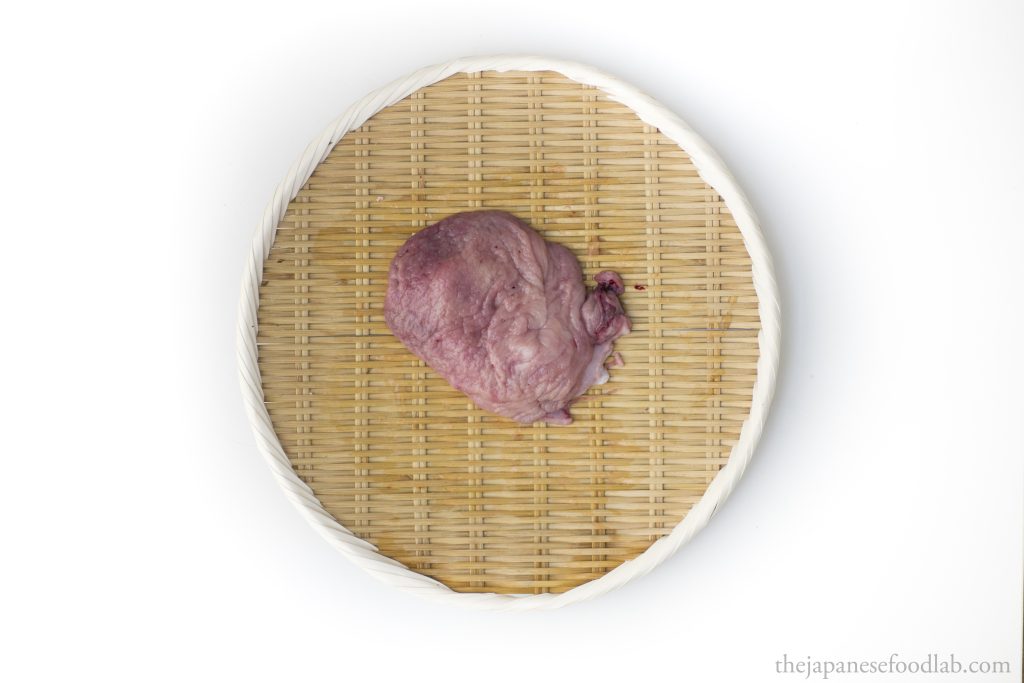
3. Stomach (Mizubukuro/水袋)
The term mizubukuro actually translates to ‘water bag’, but refers to the stomach of the monkfish. For some of you who might be familiar with eating fish stomach, the texture is very different from what you’d typically expect, not only firm and springy but actually a little crunchy in the center described as ‘korikori’ (コリコリ). It remains the texture even after long periods of cooking.
The stomach needs to be thoroughly cleaned before consuming to remove any bitter flavours, and just like the liver, can harbor anisakis parasites. It is much harder to spot and remove these parasites compared to the liver, and so it needs to be cooked thoroughly before consumption. The texture of the stomach can be unappealing for those who are not used to eating it and therefore sometimes excluded from ankonabe. Instead, it is sometimes boiled, before being sliced thinly and served with a vinegar and liver miso dressing.
4. Ovaries (Nuno/布)
The japanese term for monkfish ovaries translates to ‘cloth’ as they are not compact sacs like those of salmon ikura, but instead are thin folded sheets with the tiny eggs attached to the sheets. This means that texturally, it is soft and slightly elastic when eaten, with none of the mouth bursting sensation you’d associate with ikura.
The term anko in Japanese actually refers to several varieties of monkfish, but one of the main commonalities they share is that female monkfish grow to a much larger size compared to males. This means that small fish that you may encounter at the market have a chance of being male and therefore do not contain the ovaries. Restaurants, who serve a large number of customers, have the tools and capacity to breakdown and serve very large monkfish, and therefore usually exclusively serve female monkfish and include the ovaries.
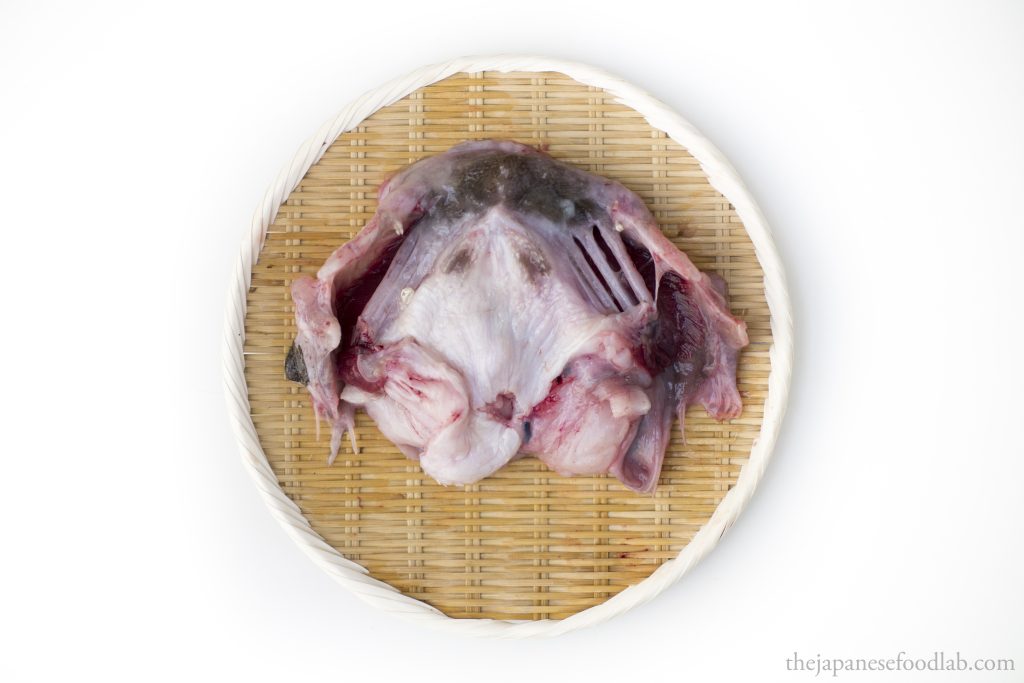
5. Gills (Era/エラ)
For almost any other fish, the gills are usually thought of as dirty as it has to filter through large amounts of seawater to obtain oxygen. Their slimy texture and blood rich taste also makes it unappealing. However, for monkfish, the grills are sufficiently soft enough to be eaten and have a less pungent aroma.
A knife is first use to scape away any excess blood from the gills, and the gills should be blanched and cut into smaller pieces before being eaten. They have a crunchy texture to them which contrasts nicely to the other treasures. Prepared in this way, they almost have no taste and are completely textural.
They can also sometimes be served fried with a crisp like texture.
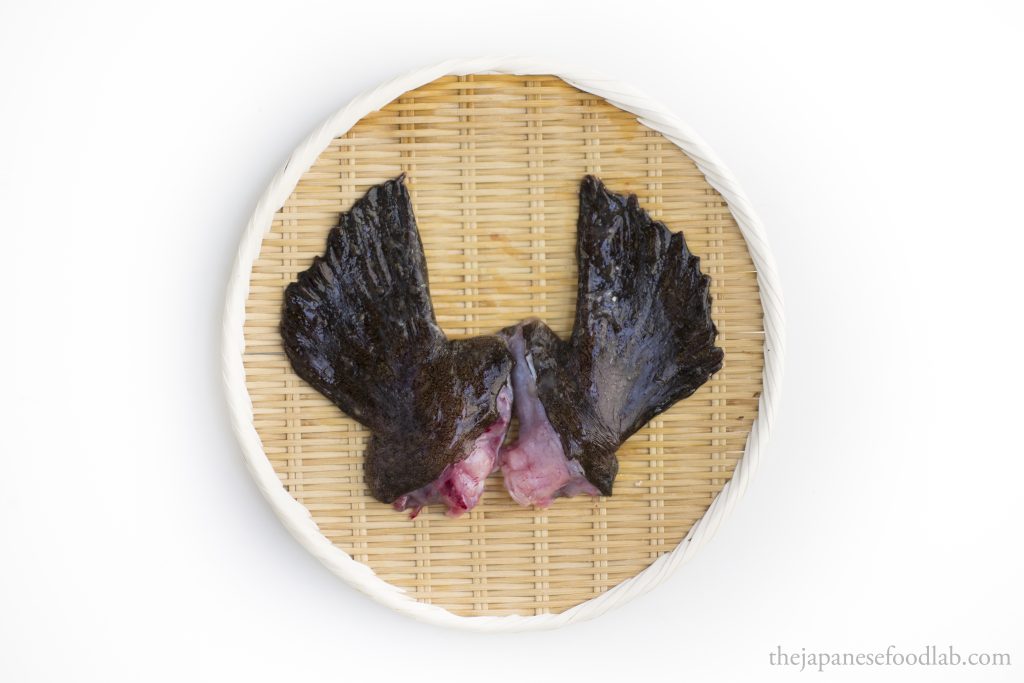
6. Fins (Tomo/とも)
Whilst the tail fin is sometimes included in this category, it is usually both of the monkfish’s pectoral fins that are the most desirable part to eat. Instead of thin bony rays of fins like most fish, the fins of monkfish are thick, fleshy and rich in connective tissue. The appeal here is that once cooked, the thicker base of the fin, which is the most prized part, take on a slippery gelatinous texture mixed with small amounts of firm flesh.
Of course the entire fin is not eaten, but instead the base of the fin in gawned on, somewhat like a chicken drumstick.
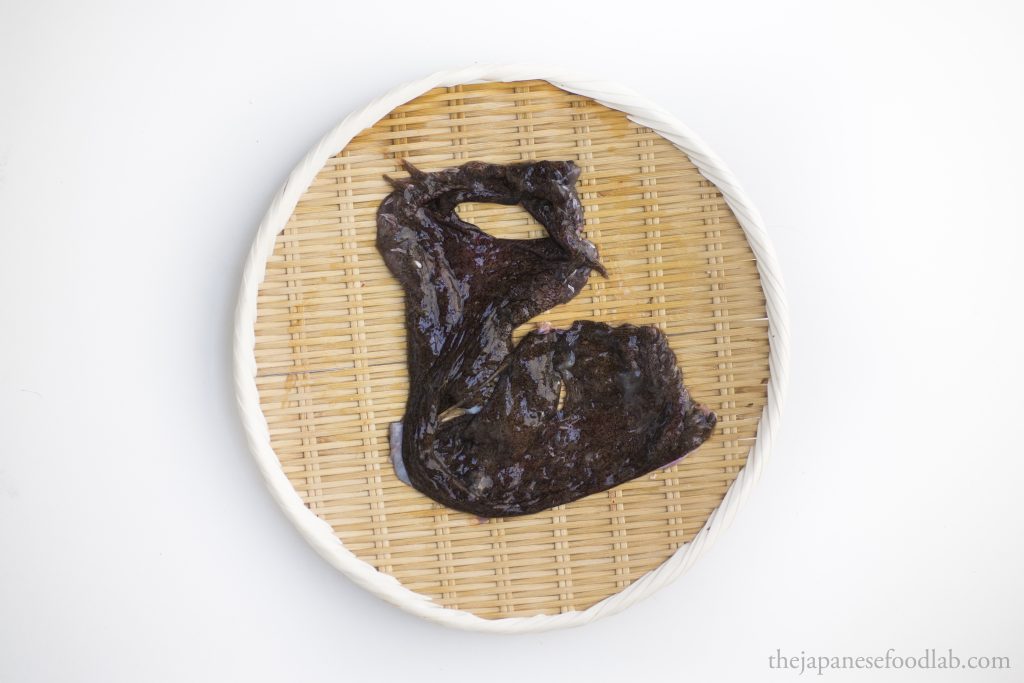
7. Skin (Kawa/皮)
As we mentioned before in our article on bear paws and tamagokakegohan, some of asia’s most expensive ingredients, like abalone, sea cucumber and fish maw, and a kind of gelatinous texture that isn’t as appreciated in the english speaking world. This texture can be described as purupuru (ぷるぷる), of which the skin of monkfish is another example of. Unlike other fish, it is thick and extraordinarily rich in connective tissues. Once cooked, it becomes softer with a lip smacking quality that is characteristic of eating Japanese preparations of anko.
Taken together, reducing monkfish to just its tail meat alone does not do justice to the versatility of this fish. Instead, each part plays a unique role, with the yanagimi providing firm white flesh, the kimo providing fat and richness, the mizubukuro and era a crunch, and the tomo and kawa the gelatinous mouthfeel.
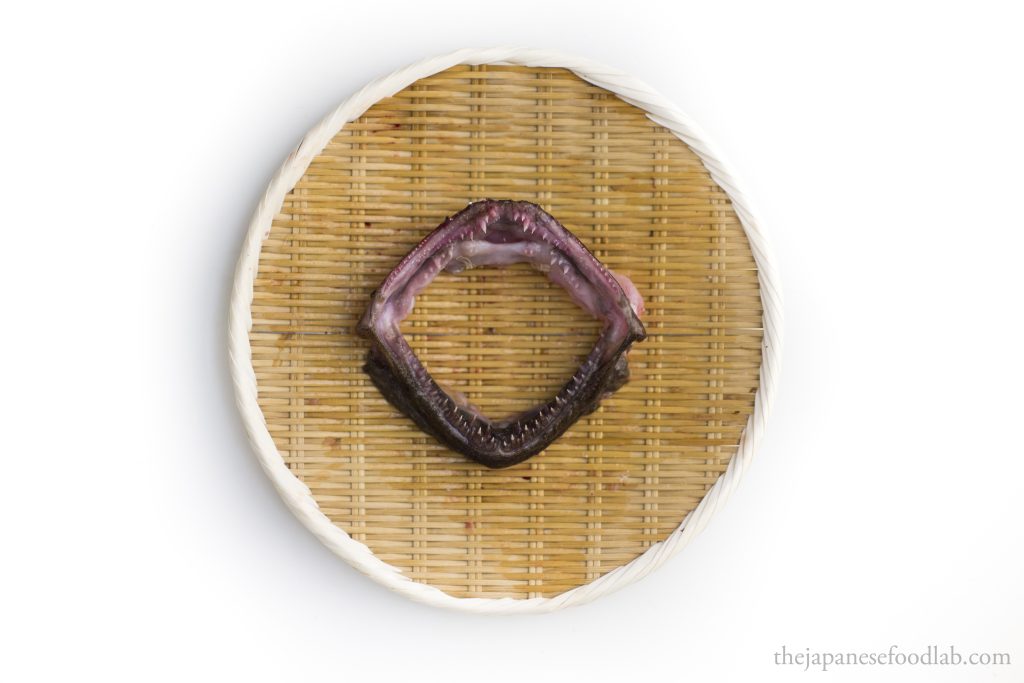
All the remains after the end of the process are the jaws and teeth, which are not consumed and discarded.

Here in France, the monkfish liver is not that expensive.
One day a wholesaler from Normandy told me that a large quantity of his monkfish livers was exported to Japan.
However, the fresh and clean one is obviously the best, and it was in Japan that I ate the best ones.
Thank you for this article.
Thank you for your continued publications here, I always look forward to your work. Keep it up