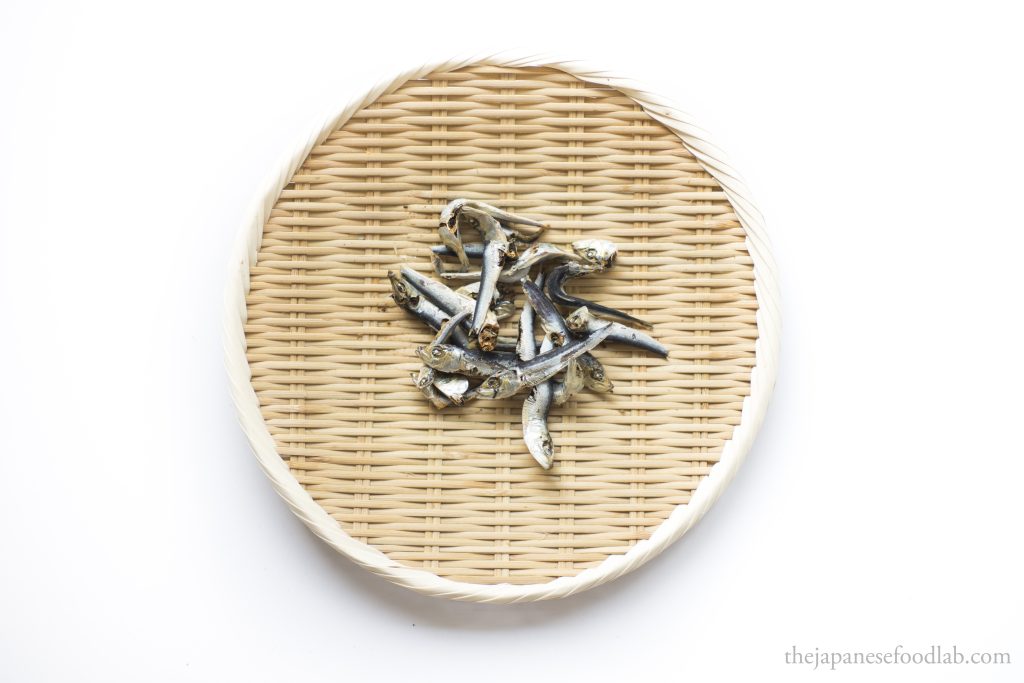
We’ve previously covered urumebushi, where urume iwashi (ウルメイワシ / 潤目鰯) is smoked and shaved into flakes similar to katsuobushi. Here, we cover a different preparation where urume iwashi is instead boiled and dried into niboshi.
Urume iwashi is known as round herring, as is recognisable due to their glossy eyes that have an almost misted appearance. This can be seen from the name urume, where ‘潤む’, urumu means to become moist or watery, and ‘目’, me, means eye, which you could translate to ‘the sardine with watery looking eyes.’
Compared to the standard katakuchi niboshi, urume niboshi is supposed to have less umami but in turn a less aggressive fishiness and is therefore less expensive. Similar to hirako niboshi, it also has a sweetness associated with it and can pair well with dashi that has a stronger taste with it, such as that made from sababushi.
With products like urume and hirako niboshi, they’re all generally cheaper than katakuchi niboshi and work as a cheaper alternative, though we wouldn’t go as far as to say that they are inferior to each other in any way. Rather, it’s better to simply view them as regional differences in availability of different fish and niboshi, with local restaurants simply using what is available to them.
Larger urume are typically not made into niboshi but are processed into bushi instead, with smaller ones with less fat most suitable for niboshi. Fresh urume niboshi should still retain its silvery blue appearance. As we covered in our article on how to store and care for niboshi, yellowing, especially around the belly, the undesirable as it indicates oxidative deterioration of the fish which can impart a slightly rancid taste to the dashi.
Learn more about different ingredients that go into dashi and other types of niboshi.
