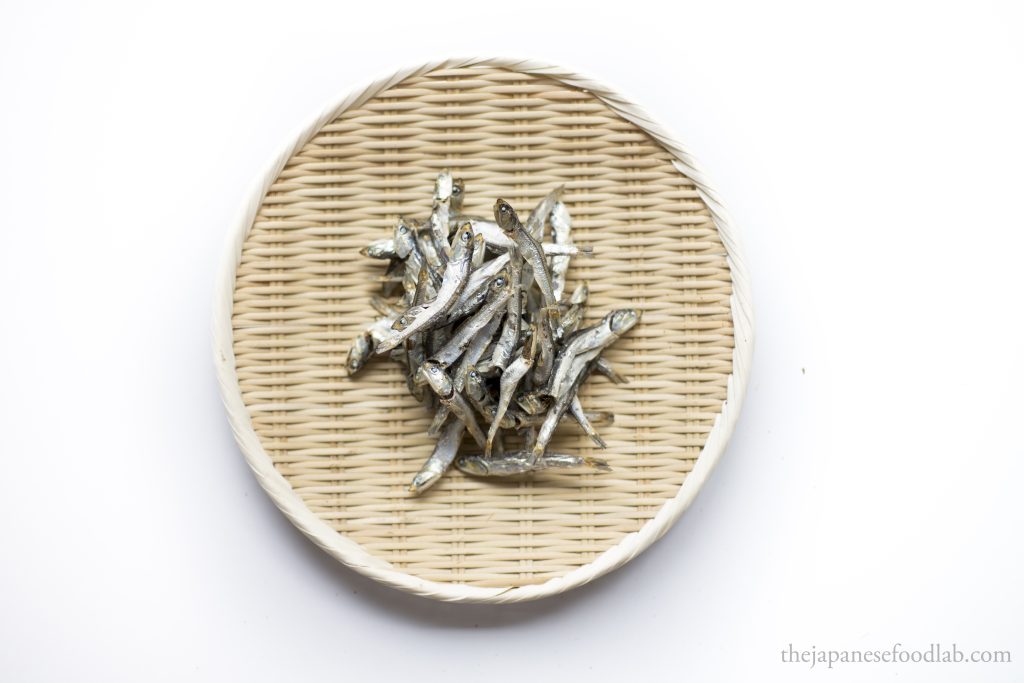
As mentioned in our previous article, the majority of niboshi made in Japan is made from katakuchi iwashi (カタクチイワシ), Engraulis japonicus, the Japanese anchovy. However, there are certain nuances when purchasing these highly sought-after niboshi that we’d like to elucidate on.
Just like kohada, the name of the Katakuchi iwashi changes throughout its life cycle. Young fish are known as shirasu (白子 / シラス), which then grow larger into chirimen (チリメン), which you might recognise as the rice topping. It is only at the adult stage that they’re known as katakuchi. As with many dried seafood, they’re naturally rich in insonic and glutamic acid, making them ideal for making stock as they impart a strong savory flavour to the soup. When making dashi, the heads and guts are removed to reduce the bitterness and fishy taste that can sometimes be associated with niboshi. For this niboshi, smaller fish are generally considered to be more premium as they are leaner with less fat and therefore produce a cleaner and more refined dashi.
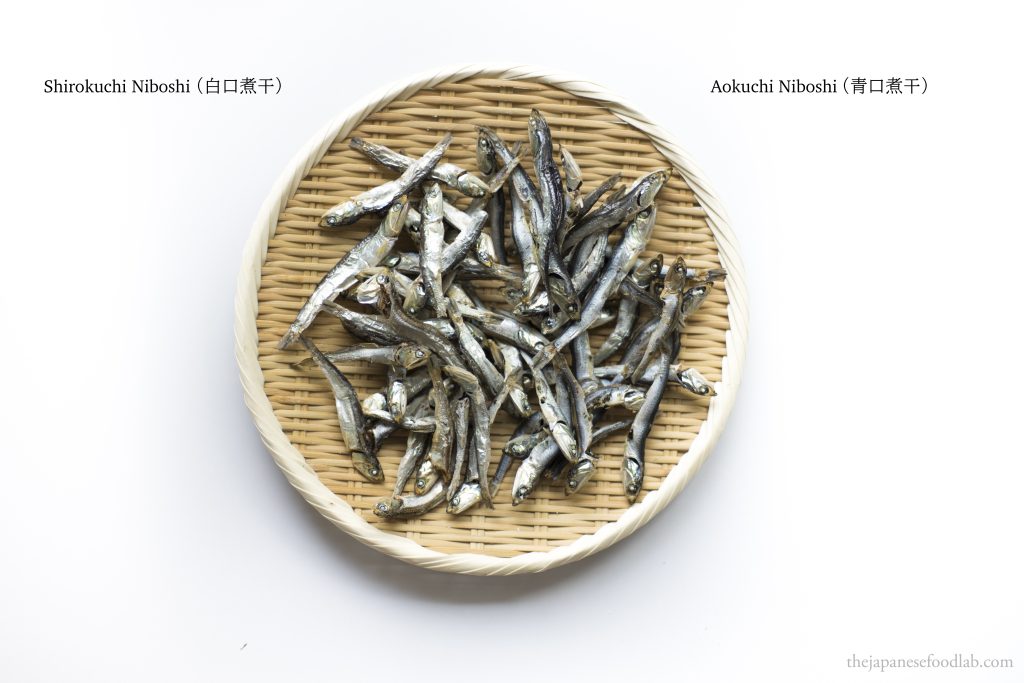
What is the difference between aokuchi (青口煮干) and shirokuchi (白口煮干) niboshi ?
Historically, the main difference between shirokuchi and aokuchi niboshi were where they were caught, even though they were both made from katakuchi iwashi.
Aokuchi sardines are caught in the open seas of the Pacific Ocean and the Sea of Japan, and have a more solid blue back coloration, hence their name (ao/青 means blue) They’re known for producing a stronger more robust broth with the trade off of having a stronger fisher taste.
Shirokuchi sardines on the other hand, are caught in inland seas such as the Seto Inland Sea, Ise Bay, and Nagasaki Bay and have a light gray back colouration. They’re known for producing a lighter but sweeter dashi and are thus sold as a more premium product.
Interestingly, there is a clear answer currently as to why their morphology changes depending on where they live, but it has been confirmed that they are actually the same species of fish, katakuchi iwashi, with differences possible due to diet such as quantity and quality of plankton or other environmental factors such as the strength of ocean currents.
However, there are exceptions to the above and it should not be understood as a strictly geographical classification. For example, one of arguably Japan’s most important iwashi fishing regions, Kujūkuri (九十九里) on the Pacific coast of Chiba Prefecture, classifies shirokuchi as typically being made from smaller one-year-old katakuchi-iwashi of around 7–9 cm, producing an elegant and sweet dashi, while larger two-year-old fish of around 10–13 cm are sold as aokuchi and produces a considerably richer and more forceful stock.
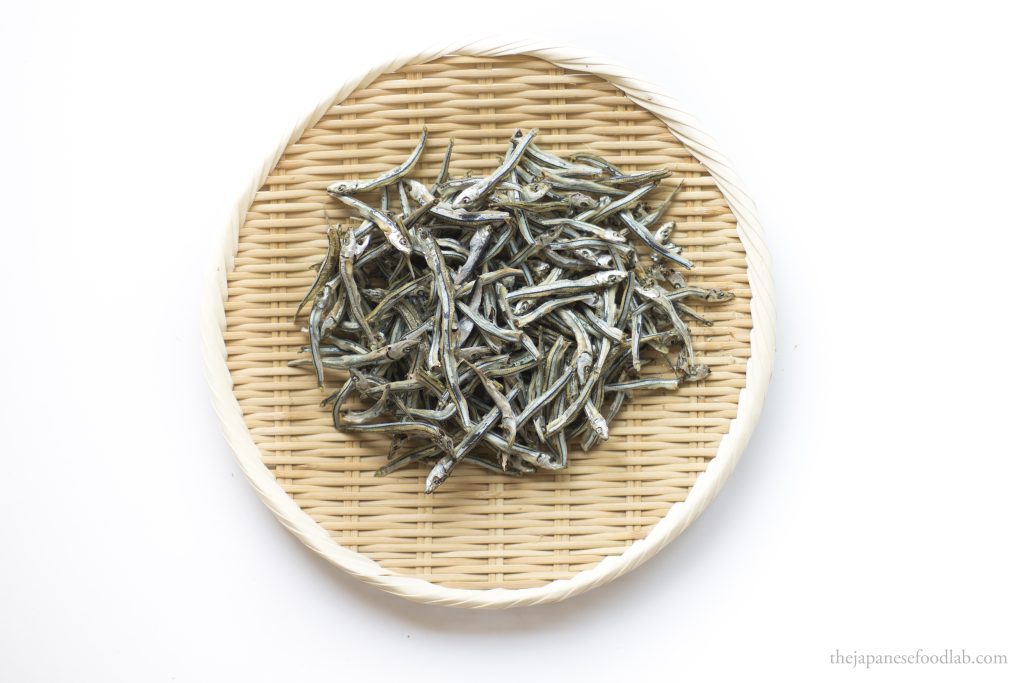
What are Setouchi iriko (瀬戸内いりこ) and Ibuki iriko (伊吹いりこ)?
In western Japan, a common term for niboshi made from small fish is also iriko (いりこ), and you’ll sometimes see the label Setouchi iriko (瀬戸内いりこ) to indicate their geographical origin, that the katakuchi iwashi used to make the niboshi was caught in the Seto Inland Sea.
This is similar to products labelled Ibuki (伊吹) and is also more specific, indicating that the niboshi comes from Ibuki Island in Kagawa Prefecture, situated in the Hiuchi-nada area of the Seto Inland Sea. Ibuki iriko is exceptionally known as the highest quality niboshi in the whole of Japan, and its claim to fame is its use in making Kagawa’s delicious udon broth. This is attributed to both the quality of katakuchi iwashi caught there, as well as the exceptionally short distance between fishing grounds and processing facilities. Freshly caught anchovies can be transported directly to the island and cooked soon after capture, helping preserve their freshness and producing a clean, high quality niboshi.
Other katakuchi niboshi of note
Ehime Prefecture is another important centre of iriko production within the Seto Inland Sea. Among its better known products is Hiuchi Hime Iriko (ひうち媛いりこ) from Shikokuchuo City, made from katakuchi-iwashi caught in the Hiuchinada area and rapidly boiled and dried after landing. Further west, the coast around Iyo City and Futami also has a long tradition of producing high-quality katakuchi iwashi iriko, sometimes sold under broader names such as Iyo iriko (伊予いりこ) or more locally as Nada no iriko (灘のいりこ). Like Ibuki iriko in neighbouring Kagawa, these products place particular emphasis on the freshness of the anchovies and the short interval between capture and processing. Our opinion of them is that they offer a more attractive price point and are very high quality in terms of dashi produced, but are less famous than Ibuki iriko.
Learn more about different ingredients that go into dashi and other types of niboshi.
