This article is part of our series on tempura.
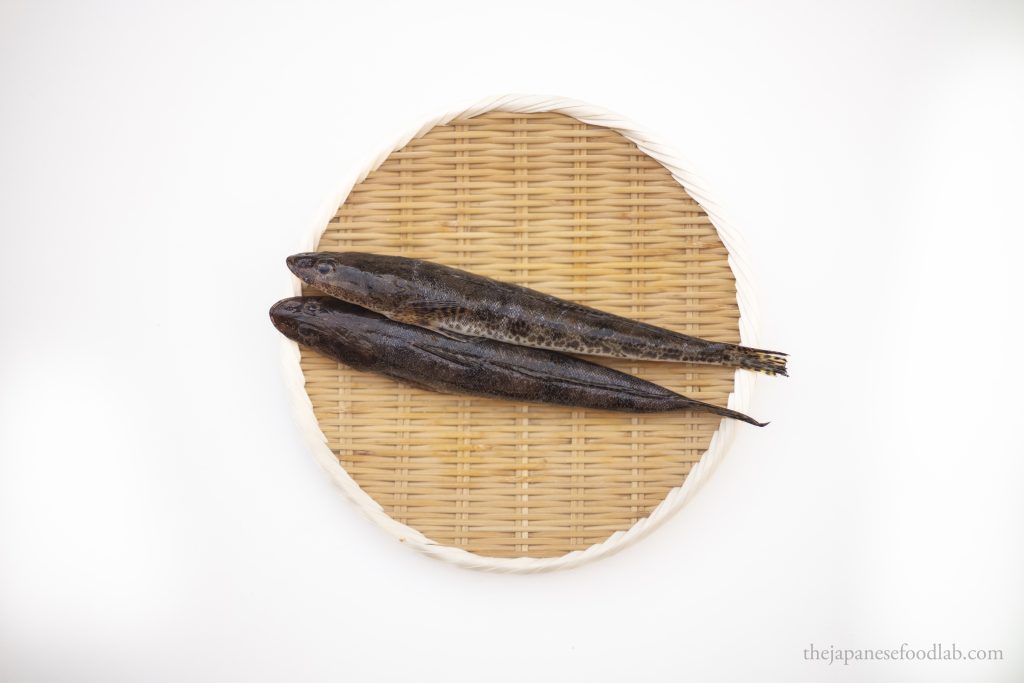
Another lesser known fish to those outside the world of tempura, Megochi (目鯒/女鯒) or big-eyed flathead, is a small sized fish that appears on menus at the peak of summer, and plays a similar role in tempura as the more famous haze that appears in the autumn. Its relatively small size and high moisture content makes it unsuitable for eating raw, compared to its more famous cousin, kochi, that is used for sashimi and sushi, both which are types of flatheads.
However, compared to kochi which can grow up to half a metre, the maximum size of megochi is much smaller, with a maximum size of around 20cm, though those below 10cm are best for eating. They’re found in sandy seabeds along shallow coastal bays and are usually sold in bulk for cheap. That is because they can be quite finicky to prepare for the inexperienced, and have several sharp edges around the body and are thus not deemed to be worth a fishmonger’s time to fillet. Therefore, it is usually left up to the consumer to do.
Just like anago, you’d notice that some chefs do not remove the rib bones or pin bones when filleting this fish as they have relatively soft bones which soften when fried as tempura, especially so for smaller sized specimens. However, for larger fish you may consider doing so.
Compared to the standard 3 piece way of filleting fish, this fish is filleted using the matsuba oroshi or pine-needling method (松葉おろし) which is used on small fish like whiting and horse mackerel, but we have yet to introduce on our website. This is where the head and spine are removed and the fish is cut in a way that both fillets are still attached to the tail. The fillets of a megochi might seem thicker than a Haze or Kisu, but do not be mistaken, once you fillet it this way, the fillets end up quite thin and cook just as quick.
Some places opt to leave the skin on the megochi before frying but we personally prefer the version where the skin is peeled off.
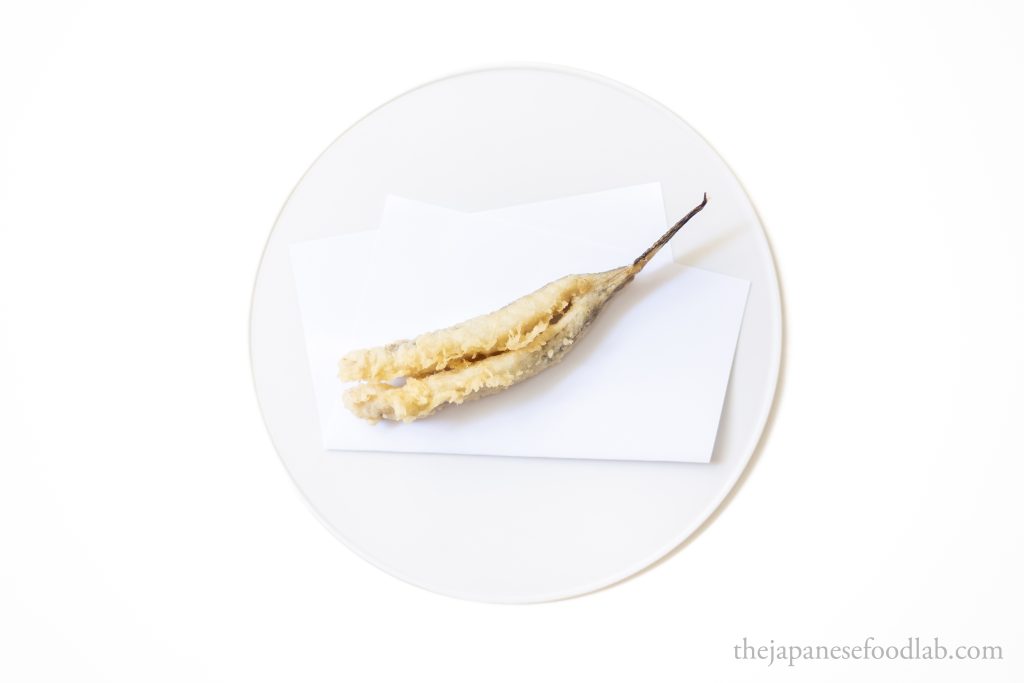
Megochi Tempura Recipe
- 1 egg (~50g without the shell)
- 200g of cold water
- 100g of cake flour
- Whole Megochi
We first begin by filleting the fish.
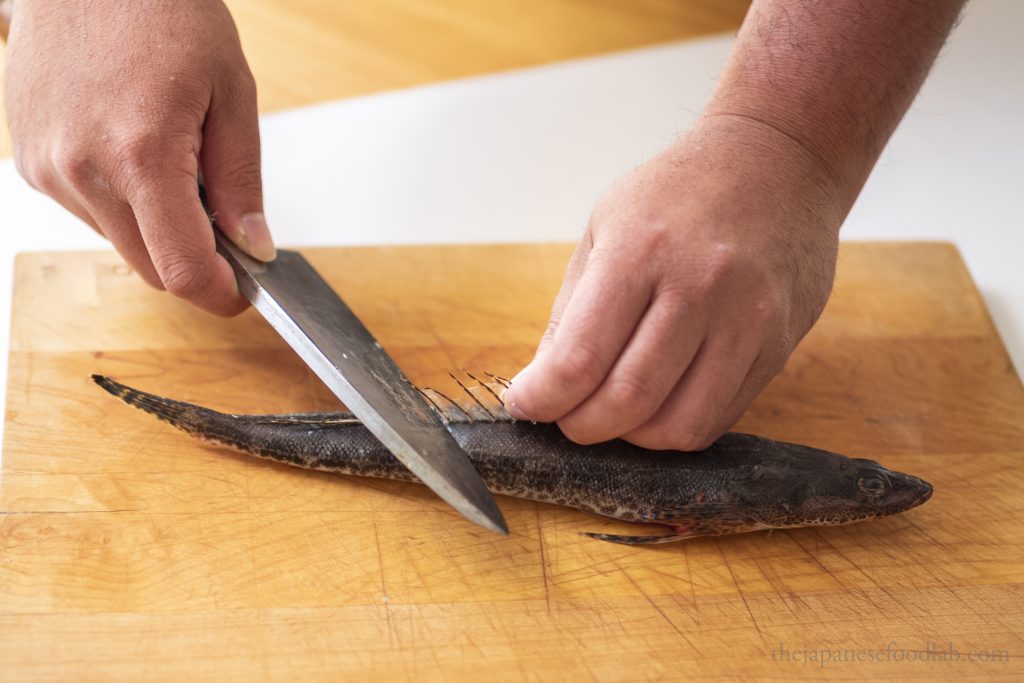
Lift up the dorsal fin so that it is fully extended and cut it off using a sharp knife. The dorsal fin can be quite hard to cut even with a sawing motion, and so you might opt to use a scissors for this step.
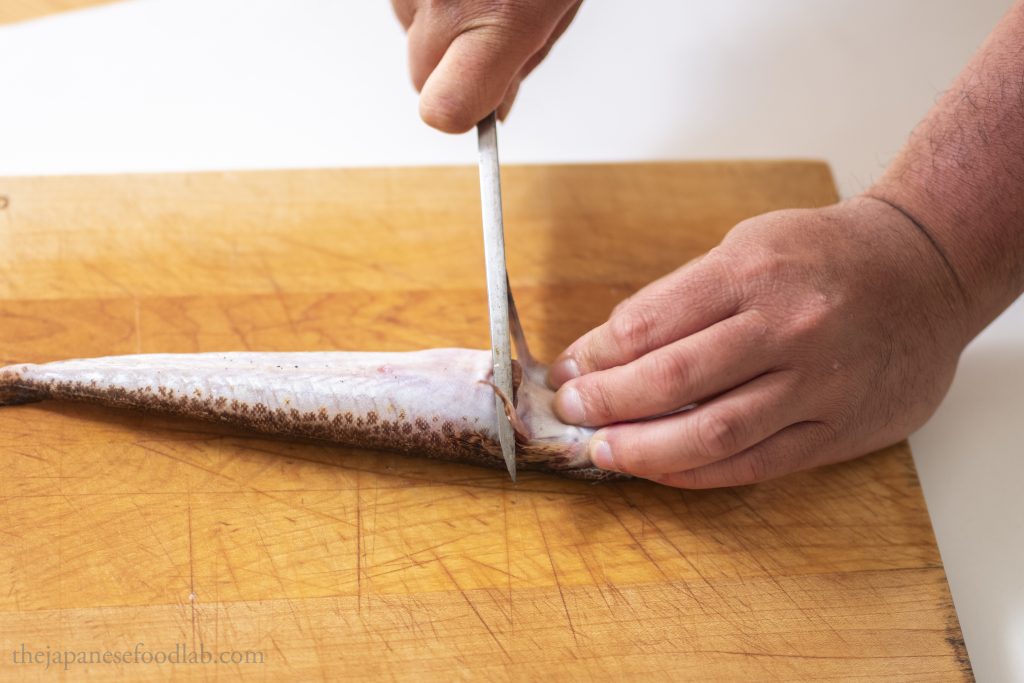
Next, position your knife at the base of the head at the throat. Serve the head at this point, but do not cut all the way through, leaving the skin at the bottom attached.
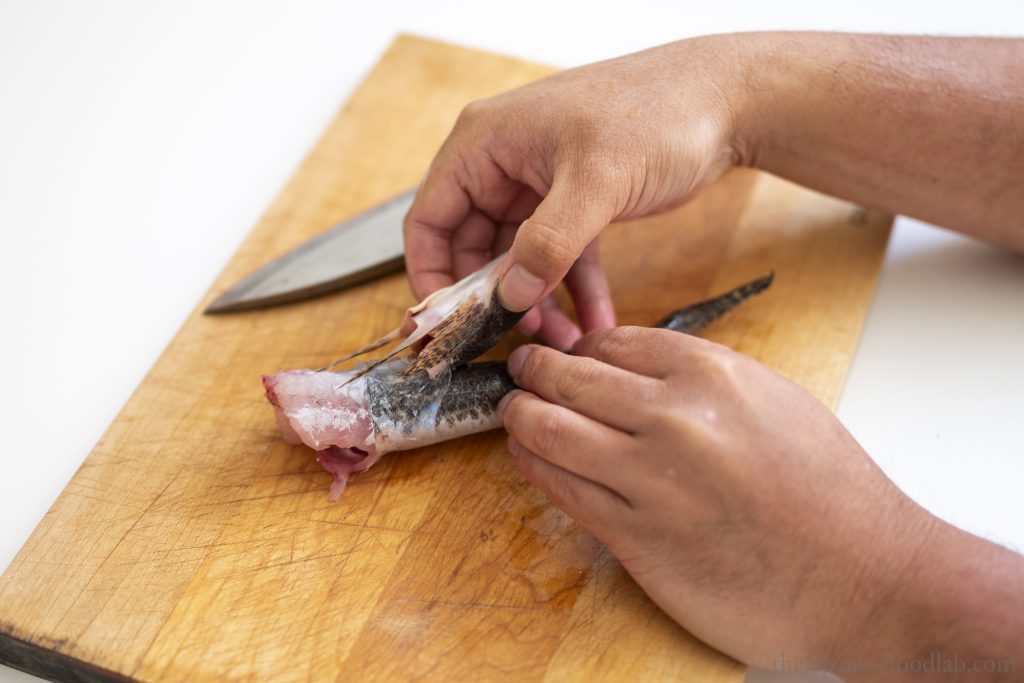
Flip the fish over and use either your other hand or knife to hot the fish down at the spine (which should now be exposed as you’ve cut through the head). Pull the head backwards, which should pull out the innards.
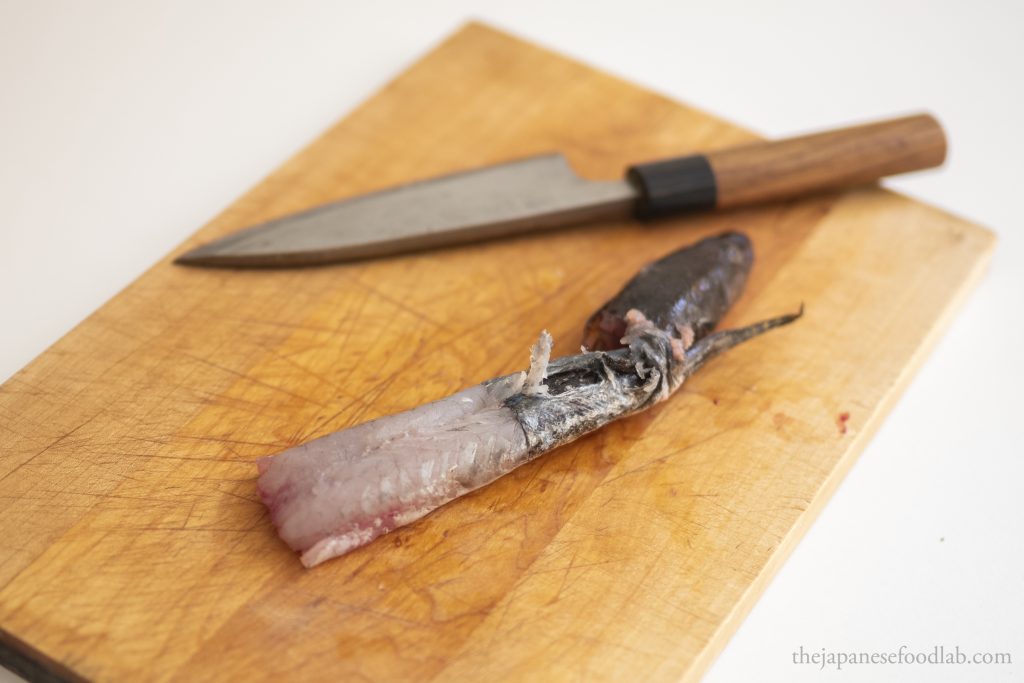
At this point, if the skin at the throat is still attached, you should be able to continue pulling and in one clean motion pull away the skin from the flesh.
Now, place the fish under running water and clean out any blood from the fillet.
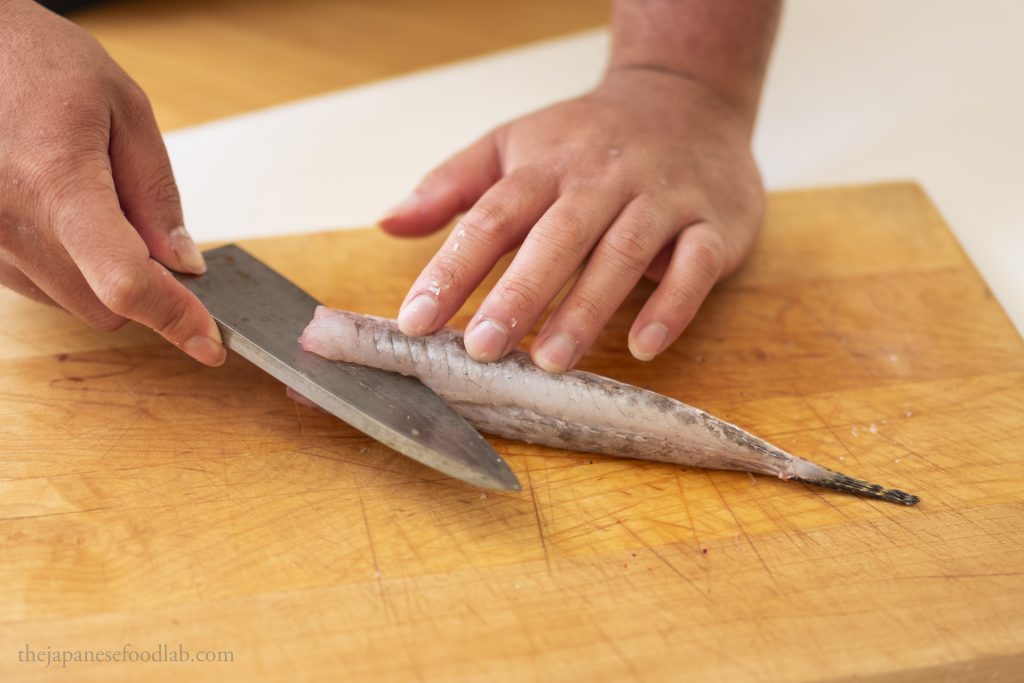
Lay the fillet on its side and cut the flesh away from the spine, keeping the knife as close to the bone as possible all the way to the tail but without severing it.
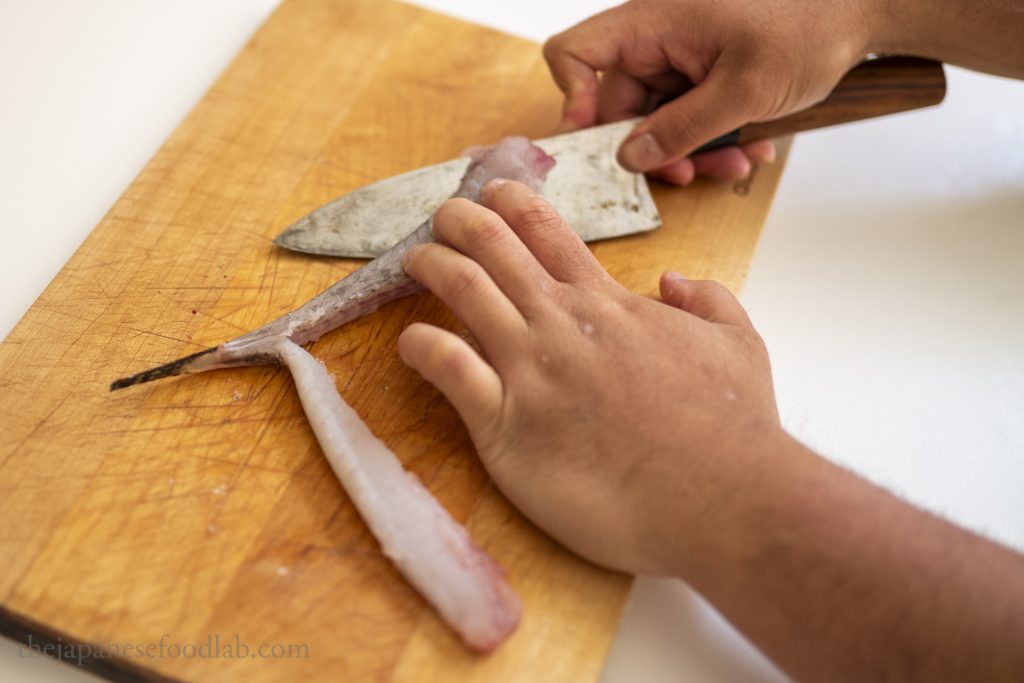
Flip the fillet onto its other side and repeat.
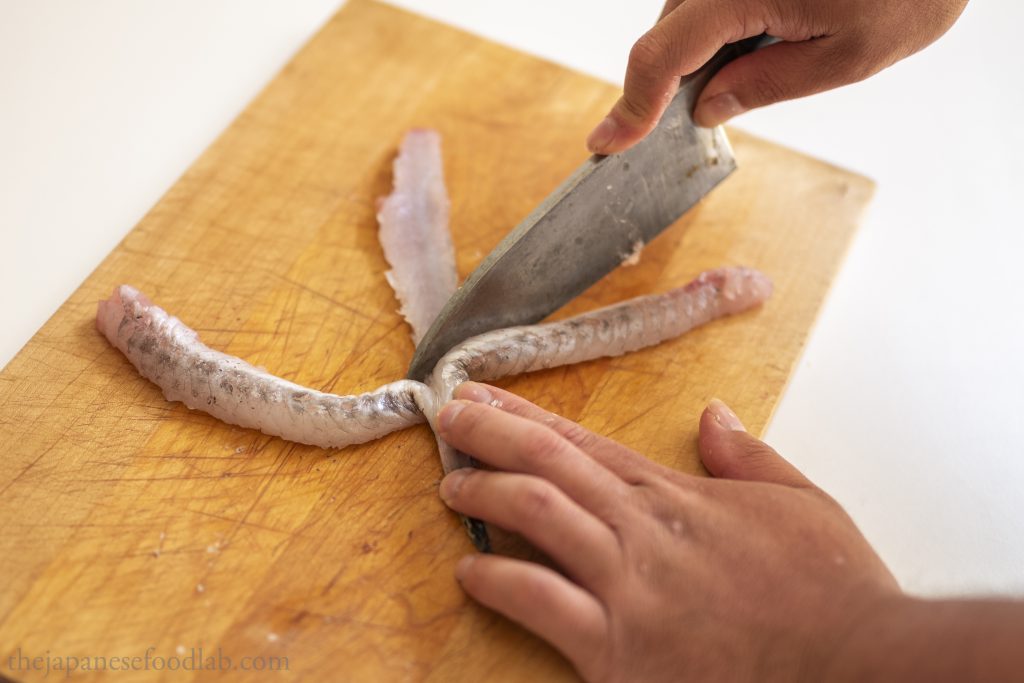
Move both fillets (still attached to the tail) out of the way and cut off the spine as close to the tail as possible.
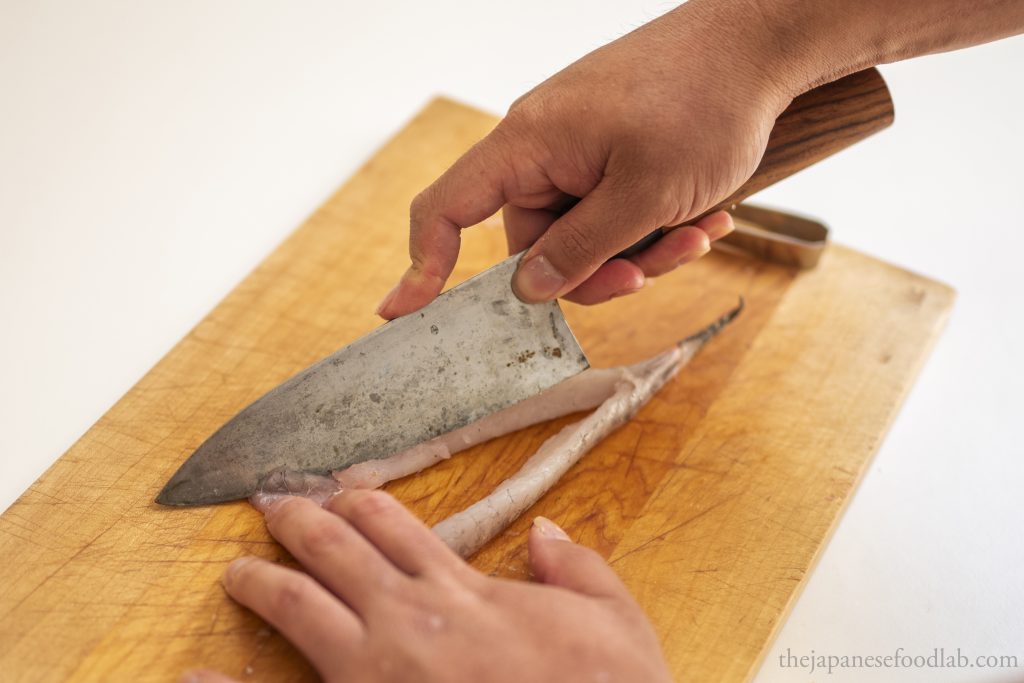
Cut off the rib bones on each side of the fillet.
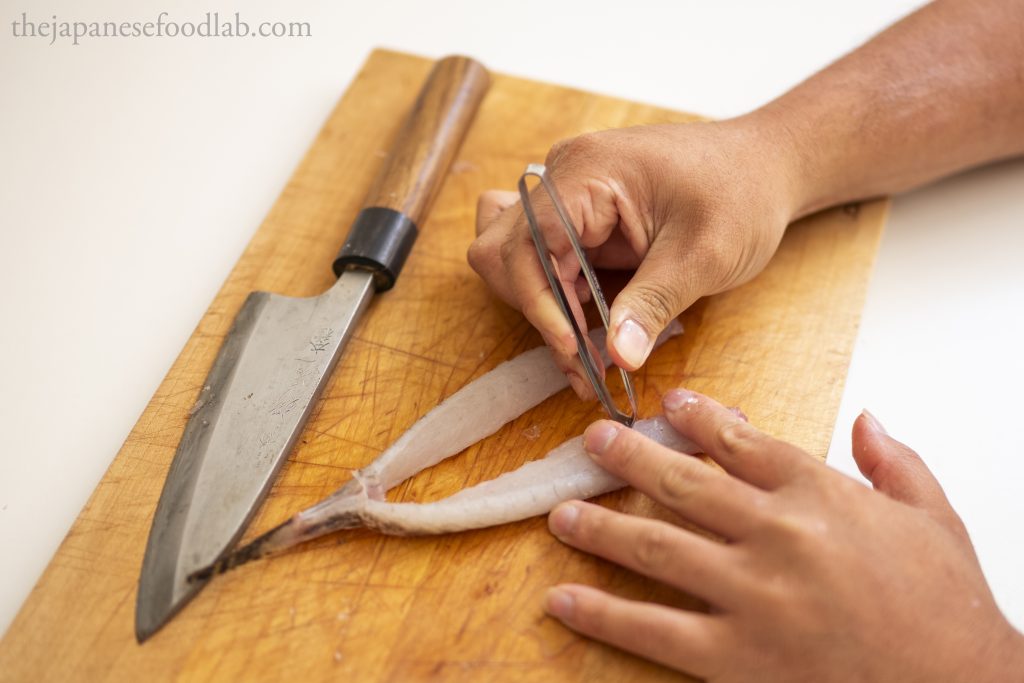
Using a pair of tweezers, remove any pin bones.
Prepare the batter following our guide to tempura batter. For advanced batters, this can be made using a thick batter as per our tempura batter variations article.
Heat your tempura oil in a pot to 180°C, coat the megochi in cake flour and then batter and gently lower into the oil.
Fry until the bubbles emerging from the oil start to become smaller.
Remove from the oil and place onto tempura paper to remove any excess oil and serve immediately.
