This article is part of our tempura series.
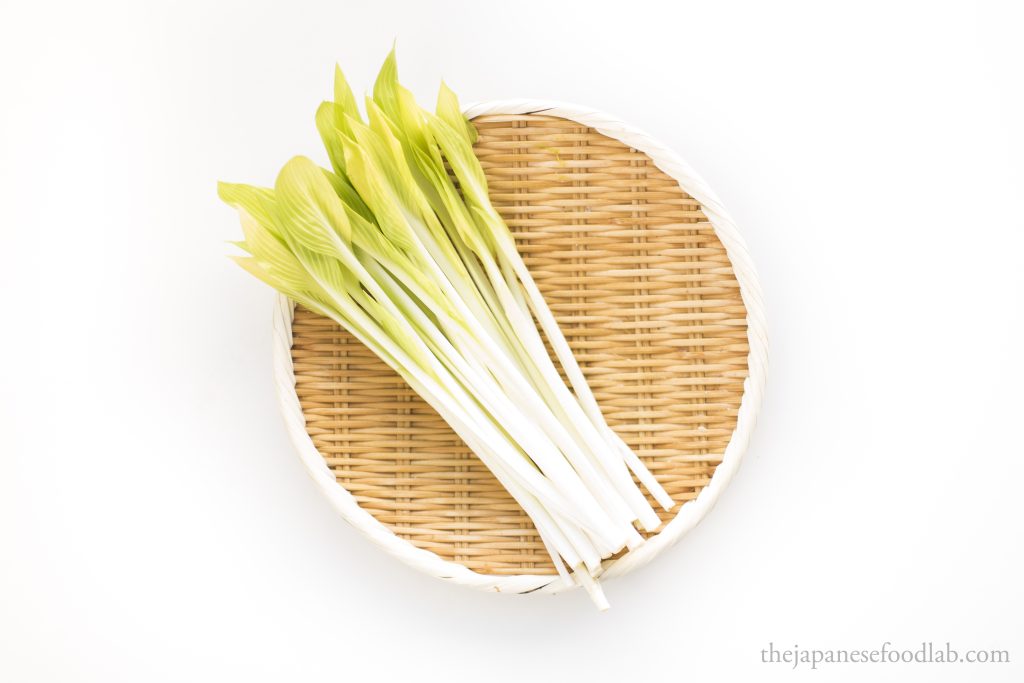
Whilst many of the Japanese spring sansai (mountain vegetables) are famously bitter, urui (ウルイ), the young shoots of certain Hosta varieties, has a clean, almost watery-like sweetness that can be brought out through frying as tempura.
Now if you’re an avid gardener, you might recognise Hostas as a genus of plants native to Japan, China and Korea but common in gardens across the world. Also known as plantain lilies (and giboshi in Japanese), they are famous for their large ornamental leaves that are shade tolerant and therefore provide beautiful foliage to otherwise shaded areas where other plants do not grow. But just as with other ornamental plants, the Hostas that are selected for growing are very different from those grown for food.
For example, the ornamental version of Hosta montana, which is the species that urui comes from, has been selected for large leaves, variegation, thickness and sometimes a waxy sheen. These very traits are opposite of what we look for in edible plants, such as thin and tender shoots with a soft texture, traits still preserved in both wild and cultivated Hostas designated for consumption. In fact, the best urui is harvested in very early spring just as the shoots are developing and the leaves have yet to fully unfurl as once the plant matures, the leaf texture hardens and the delicate taste is lost.
When selecting urui, be sure that they are pale green to yellow with no signs of browning or wilting. They should also be firm and not droop when held up.
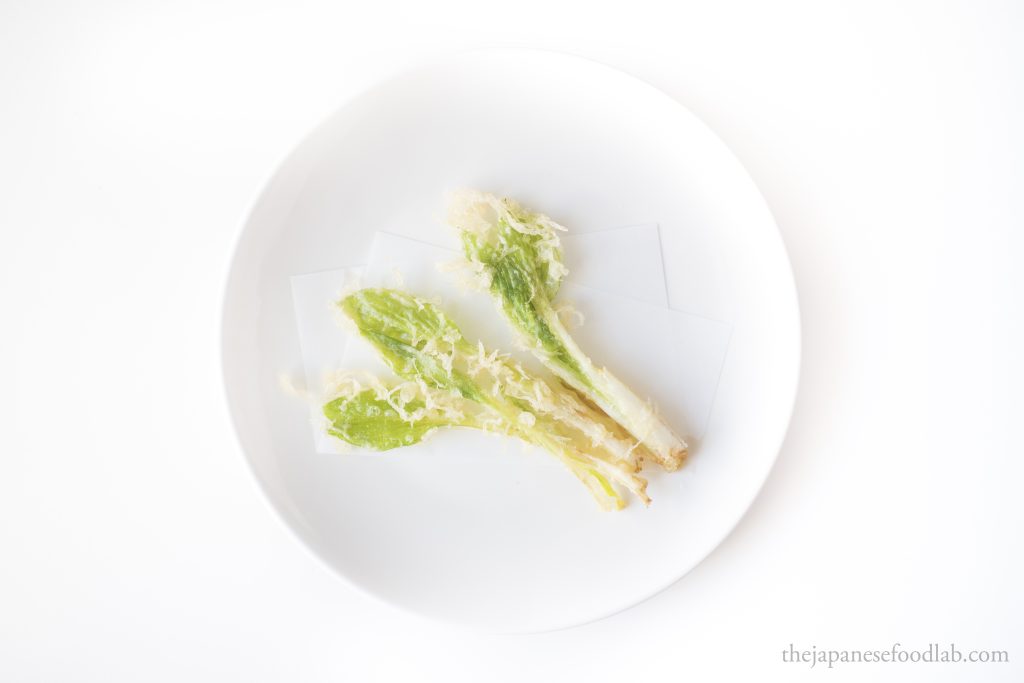
Urui Tempura Recipe
- 1 egg (~50 g without shell)
- 200 g cold water
- 100 g cake flour
- Fresh urui shoots
Trim the base of the urui if needed and gently wash to remove any dirt before patting dry with kitchen paper. However, most farmed urui are already cleaned and ready to use.
Prepare the batter following our guide to tempura batter. For advanced batters, this can be made using a medium batter as per our tempura batter variations article.
Heat your tempura oil in a pot to 180°C, coat the urui in batter and gently lower into the oil, stem first.
Fry until the bubbles emerging from the oil start to become smaller.
Remove from the oil and place onto tempura paper to remove any excess oil and serve immediately.
Note: as the urui itself should be very dry, very little to no flour sticks to it, which is why we have not found it necessary to coat it in flour before dipping into batter.
