Probably one of the most delicious fish you’ll ever have the chance to eat, the name nodoguro (のどぐろ) is thrown around as one of the most premium fish you’ll ever encounter in Japan. Interestingly, not as sashimi as you’d expect, but more likely grilled, with the smell of melting fat evaporating as it hits the binchotan filling up the room. If you’re lucky, you may also be able to try young nodoguro, filleted to the size of kisu or kasugo, making for one of the most ethereal fish for tempura.
However, it seems like this fish is used for applications beyond frying and grilling, even simmered as nitsuke or prepared shabu shabu style. How does the texture of one fish hold up to so many preparation techniques? That’s because they might not be the same fish.
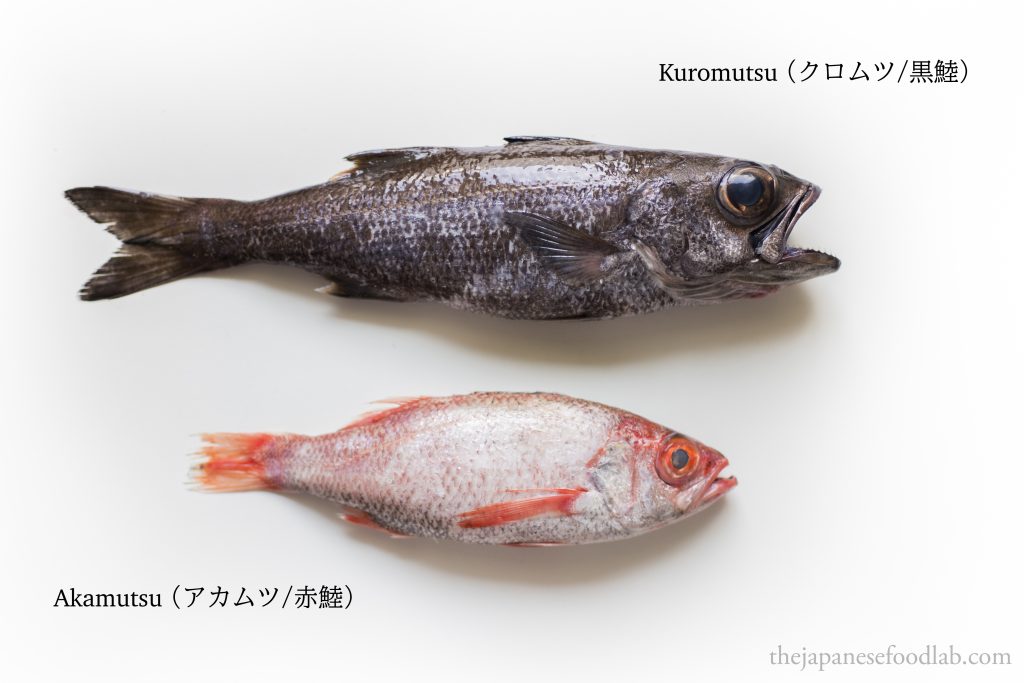
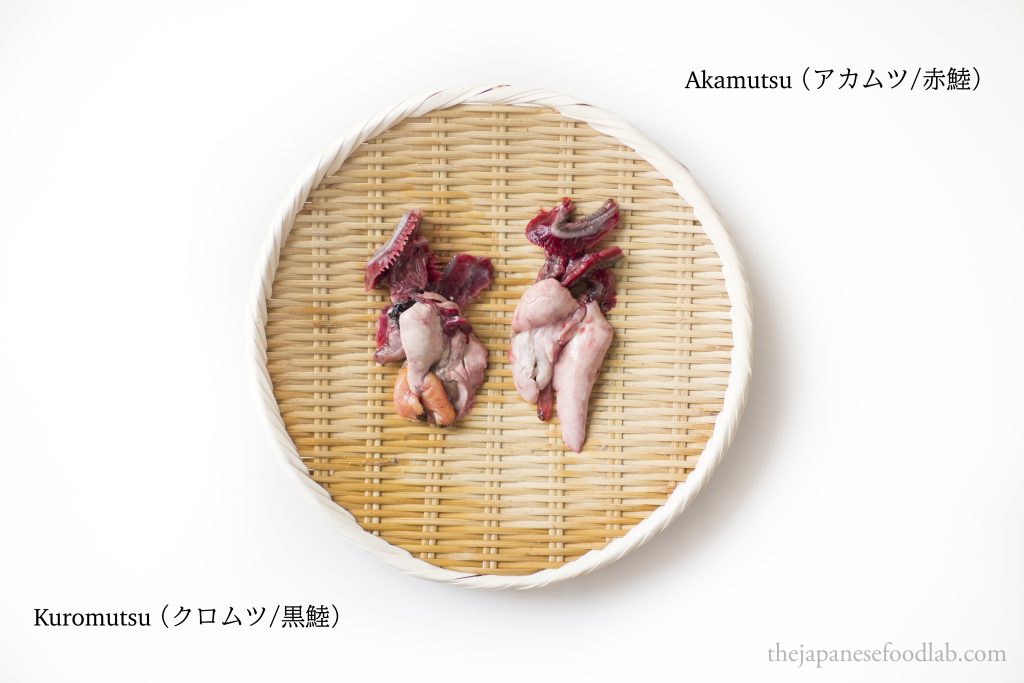
You see, the term nodoguro is actually used to refer to two different fishes at markets and restaurants. Akamutsu (アカムツ/赤鯥), or the red mutsu, and Kuromutsu (クロムツ/黒鯥), black mutsu. Both fish are not remotely related to each other at all, but similarly fetch eye watering prices at auction and are equally delicious in different ways.
What is Kuromutsu (クロムツ/黒鯥)
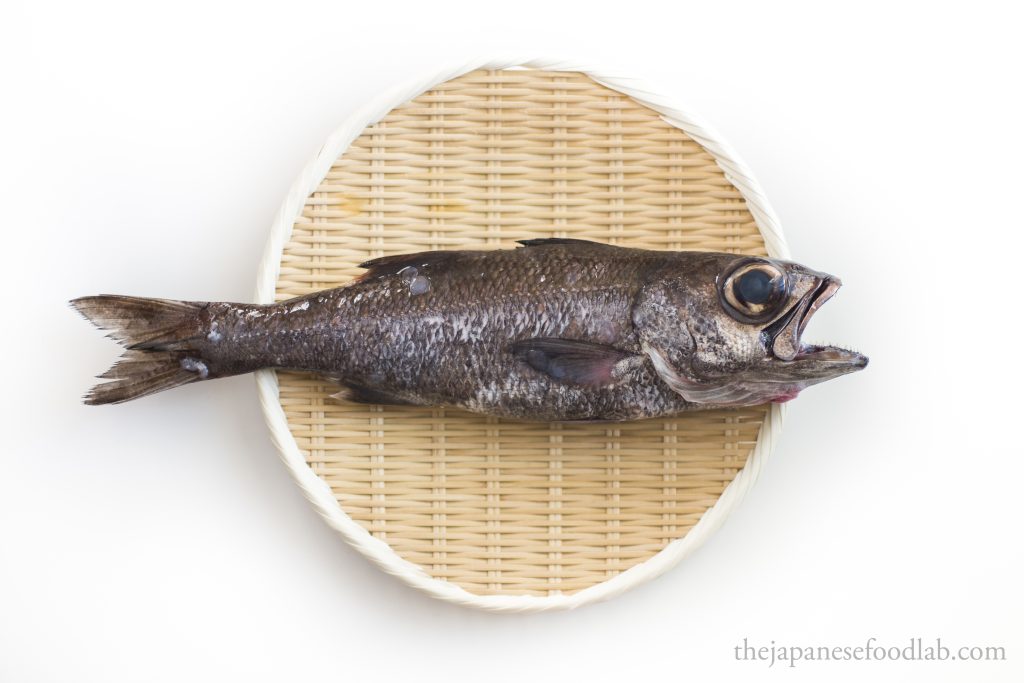
Let first dive into Kuromutsu, the much rarer and harder to come across of the two. In japanese, mutsu (ムツ科) refers to fish in the Scombropidae family which kuromutsu fits into (Scombrops gilberti). It is significantly harder to find compared to akamutsu because of its smaller distribution, mainly around the Izu Peninsula and its islands, living deep underwater at around 200 to 500 meters. They grow much larger than akamutsu, with a good sized adult being around 60cm long, though we prefer smaller ones for cooking. Their main season is during winter.
It’s easy to recognise due to its small scales and extremely sharp teeth, with flesh that has a substantial texture and a reddish hue throughout due to the visible bloodline. Despite this, the flesh has ample fat mixed throughout the muscle. This is why when a restaurant uses nodoguro for nabe or shabu shabu, they’re typically referring to Kuromutsu and not akamutsu, as it’s rich skin and subcutaneous fat gives it a nice firm bite that doesn’t dry out even when cooking in liquids.
What is Akamutsu (アカムツ/赤鯥)
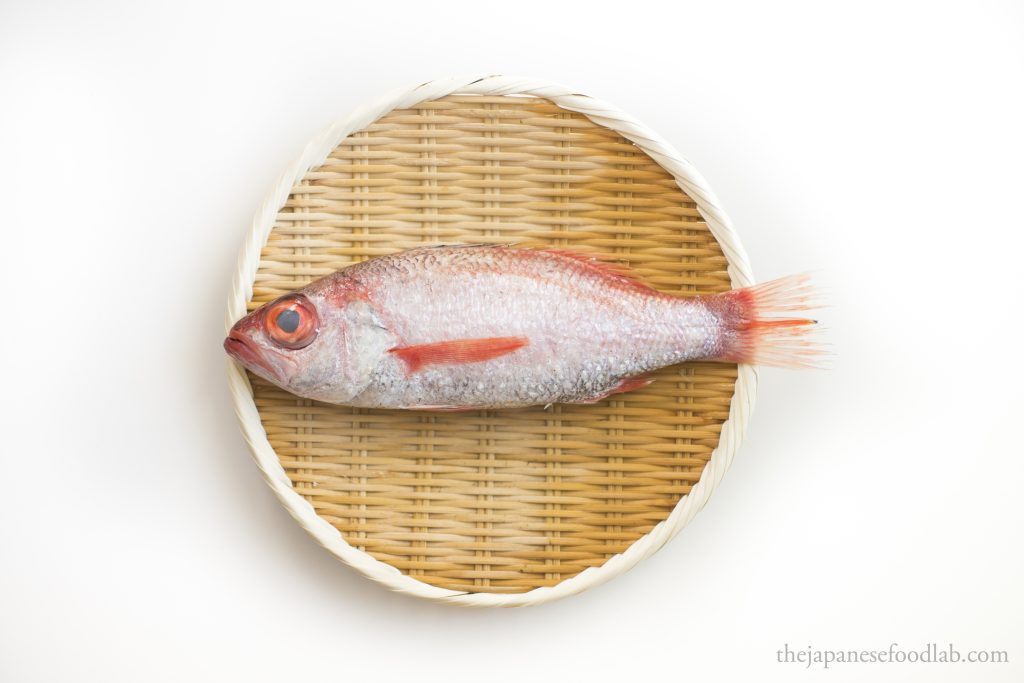
In contrast, Akamutsu is a much more delicate fish, with the handling of smaller younger ones almost feeling like the flesh around the belly can easily break apart if too much pressure is applied. It is light, with a silky texture combined with a rich fattiness that is integrated throughout the flesh. This makes it perfect for grilling, tempura and to be served as sashimi. Its season peak is from autumn to spring but is available all year round to a decent quality.
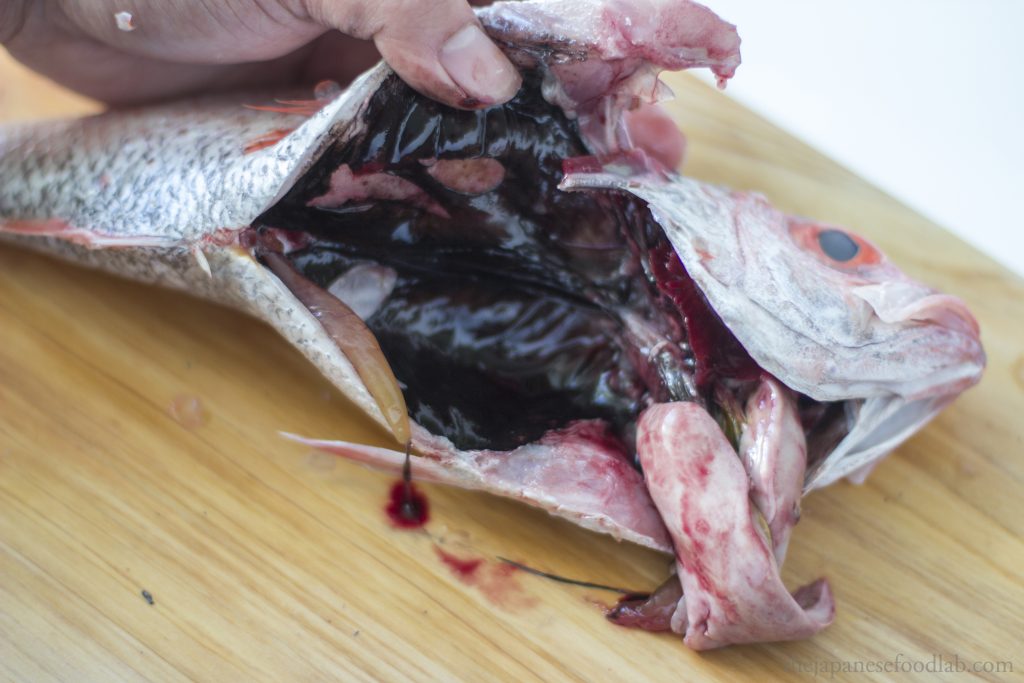
Interestingly, akamutsu (Doederleinia berycoides) is not even a true mutsu as it is part of the Acropomatidae family! But why then is it called nodoguro, which translates to ‘black throat’, as well as being known in English as the Blackthroat seaperch? This is because the inside of its mouth, throat and internet cavity is a dark, ink-like black colour.
At its peak, it is said that the fat content of akamutsu can reach up to 30% of the flesh in weight, making it amongst one of the fattiest white flesh fish you can find. In general, they do not grow quite as large as kuromutsu, and are widely distributed around the sea of Japan.
Afterthoughts
Personally, we absolutely love both kinds of Nodoguro, and actually rank Akamutsu tempura as one of the most delicious preparations we’ve ever tasted. Young akamutsu small enough to fry can be very hard to come by, and it is even more difficult to fillet properly compared to other small fish as the texture can be oily and slippery. Both akamutsu and kuromutsu have a clean, fat tasting liver that suits well for steamed preparation, just like for managatsuo. In fact, just like Managatsuo, we actually prefer both these fish cooked rather than served raw. If forced to make a choice between one or another, our preference leans towards akamutsu, though kuromutsu is still worth a try if you encounter it, given how much rarer it is.
